Beyond the glass
The Anada Spanish Wine List
What is open by the glass tonight is on the board. This is everything else: seventy-eight bottles on the page, and close to a hundred Spanish wines in the building once you count the sherries and the pours. Very little of it appears anywhere else in Melbourne, and none of it is here by accident.
- The biggest vineyard on earth. Spain has more land under vine than any other country.
- Vines that outlived the plague. Phylloxera never took hold in Spain’s sandiest soils, so it still farms ungrafted, pre-phylloxera vines. France lost hers to the plague in the 1870s and had to replant from scratch.
- Older than the rulebook. Some bottles below come off vines older than Spain’s wine laws.
- Atlantic rain to bare slate. Twenty-three regions, from the green of Galicia to the terraces of Priorat and the sun of Andalucía.
- Every wine, explained. A tasting note, a plain-English guide to the place it comes from, a way to say it out loud, and an honest account of what it stands beside.
Search it, filter it, or just scroll. If you would rather we chose for you, say so at the table. That is the better option and we will never be offended.
Espumoso Sparkling
Cava and Corpinnat. Spain's answer to Champagne, made the same way, at a fraction of the money.
Penedès3 wines
2022 Lacrima Baccus Brut Nature Cava
Zero sugar added. Bone dry, apple-skin sharp, and it makes everything you eat taste better.
$80bottle
2022 Lacrima Baccus Brut Nature Cava
Zero sugar added. Bone dry, apple-skin sharp, and it makes everything you eat taste better.
Brut Nature means nothing sweet was added back after the bubbles, so what you get is stark and clean: green apple, lemon pith, a little toasted almond from time on lees. Medium-light body, fine persistent bead, and a finish that turns almost chalky. It leaves your mouth drier than it found it.
If you drink Australian
If you like Tasmanian sparkling, the racy acid and fine bubble carry over. The difference is the fruit: apple and almond rather than strawberry and cream, and no sweetness at the end.
If you drink French
If you like Champagne, this is made the same way, second fermentation in the bottle and all. It is leaner and less bready, with more citrus bite, and it drinks best young.
Why it’s on the list
Non-vintage Champagne on any Melbourne list starts at roughly double this, and plenty of it is sweeter and simpler. Same method, same patience, none of the marketing budget.
Say it LA-kree-ma BA-koos
Same bone-dry idea, aged far longer, with real depth and toast.
2021 Lacrima Baccus Brut Nature Rosado Cava
Pink, bone dry, and built for salt. The bottle that makes olives disappear.
$80bottle
2021 Lacrima Baccus Brut Nature Rosado Cava
Pink, bone dry, and built for salt. The bottle that makes olives disappear.
Pale copper-pink from Garnacha and Pinot Noir. Wild strawberry and blood orange up front, then something more savoury underneath, like dried herbs and a squeeze of lemon. Light to medium bodied, very fine bubbles, and zero dosage so nothing sweet arrives at the end. It finishes tart and clean.
If you drink Australian
If you like Australian sparkling rosé, expect the same red-berry lift but none of the sugar. This is drier and more savoury, closer to a light red than a fruit drink.
If you drink French
If you like rosé Champagne, the bone-dry finish and fine bead will feel familiar. The fruit here is sunnier, strawberry and orange peel rather than raspberry and brioche, and it is more direct.
Why it’s on the list
Rosé Champagne is the most marked-up pink wine on earth, and the cheapest honest ones land north of $150 on a list. This does the same job at Tuesday-night money.
Say it LA-kree-ma BA-koos
Also pink and fizzy, but cloudier, wilder and completely unfiltered.
2019 Recaredo Corpinnat ‘Terrers’ Brut Nature
The bottle that ends the argument about whether Spain can make great sparkling wine.
$175bottle
2019 Recaredo Corpinnat ‘Terrers’ Brut Nature
The bottle that ends the argument about whether Spain can make great sparkling wine.
Xarel·lo-led, aged for years on its lees before disgorging, and it shows: baked apple, lemon curd, toasted hazelnut, a whiff of woodsmoke. Zero dosage keeps it severe in the best way. Medium bodied and genuinely textured, the bubbles more a fine mist than a fizz, with a long salty finish.
If you drink Australian
If you like top Tasmanian traditional-method sparkling, this shares the tension and the long lees-driven finish. Where Tasmania gives you citrus and cream, this gives you baked apple, nuts and something faintly smoky.
If you drink French
If you like grower Champagne, this is the closest thing Spain makes: the same obsession with estate fruit and long ageing, but with a Mediterranean accent, drier and more mineral than fruity.
Why it’s on the list
Grower Champagne with this much ageing and precision starts around $250 on a Melbourne list and climbs fast. At $175 it is the cheapest way to drink genuinely serious sparkling wine tonight.
Say it rre-ka-RE-doo kor-pee-NAT te-RRERS
If precision and salinity are your thing, Zárate does it without bubbles.
Rosado Rosé
Spanish pink is not Provence pink. It has colour, grip and something to say.
Rioja3 wines
2023 Sierra del Toloño Rosado
Seventy dollars for a Rioja rosado with actual grip. The house pour, if we had one.
$70bottle
2023 Sierra del Toloño Rosado
Seventy dollars for a Rioja rosado with actual grip. The house pour, if we had one.
Pale, dry and more savoury than the colour suggests. Redcurrant and pink grapefruit, a little crushed herb, and a stony edge that keeps it serious. Light to medium bodied with real texture rather than just fruit. It finishes tart and faintly bitter, in the way good European rosé does.
If you drink Australian
If you like the drier end of McLaren Vale Grenache rosé, you will recognise the red-berry core. This is leaner and more herbal, with acid doing the work that sweetness usually does.
If you drink French
If you like Provence rosé, this drinks in the same register but with more grip and less peach. Tempranillo brings a savoury, almost dusty edge that Provence tends to polish away.
Why it’s on the list
Provence rosé at this price is mostly pale water with a pretty label. Seventy dollars here buys fruit from high, cold vineyards that would cost half again from a fashionable address.
Say it SYE-rra del to-LO-nyo
Same region, all Garnacha, rounder and a touch more generous in fruit.
2024 Manuel Quintano ‘Labastida’ Rosado
Garnacha picked for freshness, not colour. Drink it while it is still this young.
$80bottle
2024 Manuel Quintano ‘Labastida’ Rosado
Garnacha picked for freshness, not colour. Drink it while it is still this young.
Pure Garnacha, made pale and dry. Think white peach, wild strawberry and a dab of orange zest, with a chalky, almost salty edge on the close. Light bodied but not thin, and there is a soft roundness in the middle that keeps it friendly. Bright acid, no sweetness, gone from the glass quickly.
If you drink Australian
If you like Barossa Grenache rosé, the strawberry and stone-fruit thing is shared. Rioja's cooler, higher vineyards give this less weight and more snap, so it drinks like a white wine wearing pink.
If you drink French
If you like Tavel or a serious Southern Rhône rosé, this is the paler, lighter cousin. Same Grenache DNA and savoury finish, less alcohol, and none of that sun-baked depth.
Why it’s on the list
Rioja rosado has never traded on fashion. The Provence bottles poured at this price are made by the million; this comes out of a small cellar in one village.
Say it ma-NWEL keen-TA-no la-bas-TEE-da
A pink wine with years on it: deeper, stranger, closer to red.
2024 Bodegas Exopto Rosado
Darker, chewier rosado. For the table that already ordered the morcilla.
$85bottle
2024 Bodegas Exopto Rosado
Darker, chewier rosado. For the table that already ordered the morcilla.
This one has more colour and more to say. Raspberry and pomegranate, a little dried thyme, and a savoury, almost meaty note underneath. Medium bodied for a rosé, with grip on the finish that reads closer to a light red than a summer pink. Dry, firm, and much better with food than without.
If you drink Australian
If you like a chilled light red, a Yarra Valley Pinot or a lighter Grenache, this sits in that space. Same easy drinking, but with a firmer, drier finish and more savoury herb.
If you drink French
If you like Marsannay rosé or the darker pinks of the Loire, you will get it immediately: fruit that leans red rather than pink, and structure that wants a plate in front of it.
Why it’s on the list
Burgundian rosés with this much structure start well north of $120 a bottle. This is under half that and, unlike almost every rosé, it is still good on day two.
Say it bo-DE-gas ek-SOP-to
Volcanic Tenerife red, light and savoury, the natural next step up.
Penedès1 wine
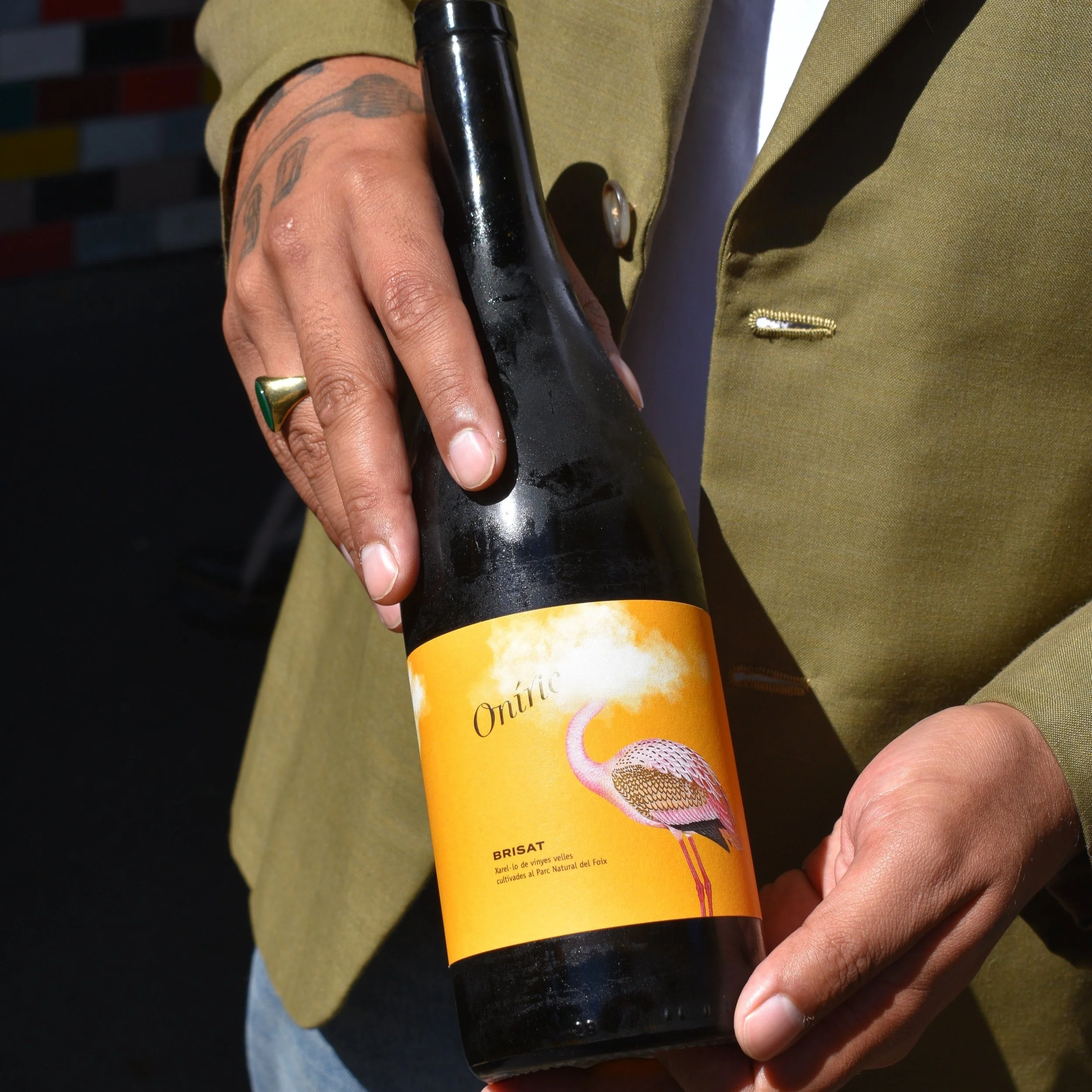
2022 Entre Vinyes Oníric Pet-Nat Rosado
Cloudy, fizzy, faintly feral. The bottle people photograph before they drink it.
$100bottle
2022 Entre Vinyes Oníric Pet-Nat Rosado
Cloudy, fizzy, faintly feral. The bottle people photograph before they drink it.
Pet-nat means it finished fermenting inside the bottle, so the fizz is soft and a little unruly and there is a haze in the glass. Expect sour cherry, blood orange and a bready, cidery note from the lees. Light bodied, low in alcohol, bone dry. It froths hard on opening, then settles into something surprisingly savoury.
If you drink Australian
If you like the pet-nats coming out of the Adelaide Hills and Gippsland, this is the same idea with a Spanish accent. Garnacha brings more red berry and less green apple, and the finish is drier.
If you drink French
If you like Loire pétillant naturel, you know the drill: cloudy, gently fizzy, unfiltered. The Spanish version brings riper red fruit instead of green apple, and a slightly softer, rounder acidity.
Why it’s on the list
Australian pet-nat this good is $70 to $90 in a bottle shop and closer to $120 on most lists. This lands under that, and it tastes like nothing else on the page.
Say it EN-tre VEE-nyes o-NEE-reek
Same maker, no bubbles, orange-wine texture and grip instead.
Ribera del Duero1 wine
2020 Pícaro del Águila ‘Clarete’
Not really a rosado. An old Ribera tradition: red and white grapes fermented together.
$120bottle
2020 Pícaro del Águila ‘Clarete’
Not really a rosado. An old Ribera tradition: red and white grapes fermented together.
Clarete is the old Castilian way, red grapes and white ones crushed into the same vat. The result is deep pink, savoury and full of texture: sour cherry, dried orange peel, a twist of white pepper and something faintly earthy. Medium bodied with real tannin for a pink wine, and a long, dry finish. Five years old and still fresh.
If you drink Australian
If you like King Valley Nebbiolo or a lighter Canberra Syrah, this is the pink version. Same savoury bones and grippy finish, less fruit weight, and a lot more old-world dustiness.
If you drink French
If you like the pale reds of the Jura or an old-school Chinon, this is that world: pink in the glass, red wine in the mouth, savoury and structured rather than fruity and easy.
Why it’s on the list
A $120 pink wine sounds absurd until you taste it beside a $70 rosé. Something this characterful and this small in production, made in Burgundy or the Jura, would be $200 and hard to find.
Say it PEE-ka-ro del A-gee-la kla-RE-te Gui is a hard g with silent u: 'A-gee-la', never 'a-GWEE-la'.
Ready for actual red now: Mencía, light on its feet, savoury.
Blanco White
Atlantic Galicia, high Castilian plains, and the whites of Rioja that nobody talks about.
Rías Baixas8 wines
2024 Ophalum Albariño
Albariño is Spain's great cold-climate white. This is the easy way in.
$95bottle
2024 Ophalum Albariño
Albariño is Spain's great cold-climate white. This is the easy way in.
Rías Baixas sits on the rainy Atlantic coast, and Albariño grown there is all tension. Green apple, white peach, grapefruit pith and a saline snap at the end. Medium-light bodied and dry, with a slightly waxy texture that stops it being merely sharp. The finish is long and mouthwatering.
If you drink Australian
If you like Adelaide Hills Sauvignon Blanc, the citrus lift and crunch will feel familiar. Albariño swaps the passionfruit and cut grass for stone fruit, sea salt and a rounder, more textural middle.
If you drink French
If you like Sancerre, this takes the same seat at the table: dry, mineral, shaped around food. Albariño is fleshier and less flinty, with sea salt where Sancerre gives you wet stone.
Why it’s on the list
A Sancerre with this much personality starts around $110 to $120 on a list and climbs from there. Albariño stays underpriced largely because fewer people can pronounce it.
Say it o-FA-loom
More perfume and polish, from a benchmark Rías Baixas name.
2024 Terras Gauda ‘Abadía de San Campio’
The floral one. Peach, orange blossom, then a saline slap to keep it honest.
$100bottle
2024 Terras Gauda ‘Abadía de San Campio’
The floral one. Peach, orange blossom, then a saline slap to keep it honest.
Albariño at its most perfumed: orange blossom, white peach, honeysuckle and a lift of citrus zest. The palate is drier and firmer than the nose promises, medium bodied, with a fine, almost powdery texture and a distinctly salty finish. Aromatic without being sweet, which is a harder trick than it sounds.
If you drink Australian
If you like aromatic Margaret River whites, or Eden Valley Riesling for its perfume, this gives you the same lift. The difference is the finish: salt and grapefruit pith rather than lime and steel.
If you drink French
If you like Alsace Pinot Blanc or a dry Loire Chenin, this lands nearby: aromatic, dry, textured. Albariño brings more sea air and citrus, less orchard-fruit weight, and stays lighter on its feet.
Why it’s on the list
A hundred dollars buys a wine from one of Galicia's most respected houses. The Alsace or Loire equivalent, same standing and same complexity, sits closer to $150 here because those names sell themselves.
Say it TE-rras GOW-da a-ba-DEE-a de san KAM-pyo
Same corner of Galicia, blended with local grapes, even more perfume.
2024 Nanclares y Prieto ‘Tempus Vivendi’
Albariño for people who think they know Albariño. Salt, texture, a long slow finish.
$115bottle
2024 Nanclares y Prieto ‘Tempus Vivendi’
Albariño for people who think they know Albariño. Salt, texture, a long slow finish.
This is the leaner, more serious end of Rías Baixas. Less overt peach, more lemon rind, green almond and crushed oyster shell. Medium bodied with a real thread of texture running through it, the sort of white that feels chewy rather than simply crisp. Dry, mineral, and it keeps going long after you swallow.
If you drink Australian
If you like a fine unoaked Mornington Peninsula Chardonnay, this scratches the same itch: texture over fruit, length over flash. It is saltier and more citrus-driven, with a firmer, drier finish.
If you drink French
If you like Chablis, this is your Spanish bottle. Same austerity, same oyster-shell edge, same refusal to show off. The fruit sits a shade riper and the salinity is far more obvious.
Why it’s on the list
Village Chablis from a grower who cares starts near $130 on a list, and premier cru doubles that. This does the same job for $115 and tastes more clearly of somewhere.
Say it nan-KLA-res ee PRYE-to TEM-poos bee-BEN-dee
Neighbouring benchmark with a year more age and more depth again.
2024 Santiago Ruiz ‘O Rosal’
A blend, not a single grape. More flowers, more nerve, and it smells like spring.
$120bottle
2024 Santiago Ruiz ‘O Rosal’
A blend, not a single grape. More flowers, more nerve, and it smells like spring.
O Rosal sits on the Portuguese border, where Albariño is blended with local aromatic grapes. The result is fragrant: pear, lime blossom, fennel and a hint of green herb. Medium-light bodied, dry and taut, with citrus acid holding all that perfume in place. It finishes clean and faintly bitter, in a good palate-clearing way.
If you drink Australian
If you like Clare Valley Riesling, the tight citrus line and floral top note will land. This is softer in acid, wider in flavour thanks to the blend, and finishes savoury rather than steely.
If you drink French
If you like a good Alsace blend or an aromatic Loire white, this is the Atlantic Spanish version: perfumed but bone dry, built on herb and citrus instead of orchard fruit and spice.
Why it’s on the list
This is what $120 should buy: an established Galician name with real aromatic complexity. The comparable Alsace bottle, same standing, sits closer to $160. Aromatic whites are the last place pedigree is still cheap.
Say it san-TYA-go rroo-EETH o rro-SAL
The same blend idea from a neighbour, richer and more textural.
2023 Bodegas Pentecostés Albariño
A year older than the rest of them, and it shows. Albariño with flesh on it.
$125bottle
2023 Bodegas Pentecostés Albariño
A year older than the rest of them, and it shows. Albariño with flesh on it.
Given a little bottle age, Albariño trades crunch for depth. Baked pear and preserved lemon here, a waxy, almost honeyed edge, and still that Atlantic salt underneath. Medium bodied, broader and rounder than a freshly bottled Rías Baixas, with acid that has softened into something silky. The finish is long and savoury.
If you drink Australian
If you like aged Hunter Valley Semillon, you know what a couple of years does to a taut white. Same move here: toast and lanolin creeping in while the acid quietly holds everything together.
If you drink French
If you like white Burgundy from the Côte de Beaune for its texture rather than its oak, this gives you that broad, mouthfilling shape with no barrel character. Drier finish, more salt, less butter.
Why it’s on the list
Someone paid to hold this back and let it grow up, and the price barely reflects it. White Burgundy with this much development and texture starts at $200 and is a coin toss on the day.
Say it bo-DE-gas pen-te-kos-TES
Aged white Rioja takes the same idea much further, still fresh.
2024 Terras Gauda ‘O Rosal’
Albariño with two rare locals blended in. Fuller and more perfumed than most.
$130bottle
2024 Terras Gauda ‘O Rosal’
Albariño with two rare locals blended in. Fuller and more perfumed than most.
This is not straight Albariño. Loureiro brings a lift of bay leaf and white flowers, Caíño Blanco brings the bite. Nectarine and grapefruit pith up front, then a chalky, slightly bitter grip through the middle. Medium bodied and broader than most Rías Baixas whites, finishing long and dry with a salty edge.
If you drink Australian
If you like Margaret River Semillon Sauvignon blends, the citrus drive and herbal lift carry straight over. What changes is the salt and the firmer, more mineral finish in place of tropical fruit.
If you drink French
Muscadet aged on its lees is the closest French cousin for the salinity and grip. This is riper, rounder and far more floral, with perfume that Muscadet never bothers with.
Why it’s on the list
The Chablis Premier Cru that gives you this much grip and length sits a long way north of it on any Melbourne list. Rías Baixas is one of the last places where blending three hand picked grapes does not get priced like a trophy.
Say it TE-rras GOW-da o rro-SAL
Same O Rosal blend idea, softer and more openly floral in style
2022 Zárate Albariño
The Albariño that proves the grape ages. Three years on and it is only opening up.
$145bottle
2022 Zárate Albariño
The Albariño that proves the grape ages. Three years on and it is only opening up.
Val do Salnés sits closest to the Atlantic and it shows: this is the tighter, saltier end of Albariño. Green apple and lemon oil, a little wax and crushed stone from bottle age, no oak anywhere near it. Medium bodied but built on acid rather than flesh, finishing long, dry and faintly briny.
If you drink Australian
If you like Great Southern Riesling, the lemon drive and stony finish are familiar territory. The difference is texture: more flesh across the middle here, and sea salt where the Riesling gives you lime.
If you drink French
Think Chablis from a good grower rather than Sancerre. Same oyster shell restraint and quiet power, but with a sea air salinity that Chablis, for all its chalk, never quite reaches.
Why it’s on the list
Growers of this standing in Chablis or the Loire doubled their prices in a decade. Galicia has not caught up, which makes a bottle with real age from a benchmark family one of the sharpest buys on this list.
Say it THA-ra-te Z is a Spanish 'th'; Galician locals often soften it toward 's'.
Another Val do Salnés Albariño, younger and brighter but same saline backbone
2024 Nanclares y Prieto ‘Soverribas’
The single-parcel wine from the producer already open by the glass.
$170bottle
2024 Nanclares y Prieto ‘Soverribas’
The single-parcel wine from the producer already open by the glass.
One parcel of forty-five-year-old vines, raised in large neutral oak so the wood gives breadth and no flavour. Lemon curd, quince, a little beeswax, and running under all of it an acid line with the crunch of good Chenin. Texture is the point here. It has the weight to sit still in the glass and the tension to keep going long after you swallow.
If you drink Australian
The taut, lees-worked Chardonnay coming out of the Yarra and the Mornington now works the same way, fruit held back and texture doing the talking. The grape is Albariño, so the acid is brighter and the finish turns salty rather than creamy.
If you drink French
Savennières is the reference. Same beeswax and quince, same firm acid, the same refusal to be charming early. This is younger and more coastal, sea salt where Savennières gives you wool and wax.
Why it’s on the list
Anada pours the Nanclares blended wine, ‘Tempus Vivendi’, by the glass. This is the same hands working one old parcel instead, which is the point where Albariño stops being a fresh white and becomes a serious one. It sits beside Loire Chenin and white Burgundy of real standing and holds the conversation.
Say it nan-KLAH-res ee pree-EH-toh, so-veh-REE-bas
The same producer's blended wine, and the one you can order by the glass.
Rioja4 wines
2023 Manuel Quintano Blanco
White Rioja without the oak. Viura served straight: apple, fennel, chalk.
$95bottle
2023 Manuel Quintano Blanco
White Rioja without the oak. Viura served straight: apple, fennel, chalk.
Viura is the grape behind classic white Rioja, and here it is poured straight rather than buried in barrel. Green apple, pear skin and a fennel top note, with a chalky dryness that builds the more you drink. Light to medium bodied, quiet on the nose, much more interesting in the mouth. Finishes clean and savoury.
If you drink Australian
If you like Beechworth Chardonnay in the tight, mineral style, the restraint and the chalky finish transfer directly. Viura gives you apple and fennel instead of grapefruit, and no oak at all.
If you drink French
Closer to a dry Loire Chenin than to anything else: same apple and chalk, same refusal to shout. The difference is a Spanish savoury edge rather than honey and wet wool.
Why it’s on the list
White Rioja from a serious Labastida address at ninety five dollars is an anomaly. Grower Chenin from Anjou became a collector item and prices like one. Nobody has done that to Viura yet.
Say it ma-NWEL keen-TA-no
Same region, more perfume and weight thanks to the Malvasía in it
2018 Familia Chávarri ‘Larchago’ Blanco
An eight year old white on a list where most whites are eighteen months old.
$110bottle
2018 Familia Chávarri ‘Larchago’ Blanco
An eight year old white on a list where most whites are eighteen months old.
Age is the whole point here. Viura's green apple has turned to baked apple and quince, joined by honey, toasted nuts and a polished, waxy texture that only years in bottle produce. Medium bodied and gentle, low on acid fireworks, long and savoury at the close. Nothing about it shouts, which is exactly the appeal.
If you drink Australian
If you like aged Clare or Eden Valley Riesling for the toast and honey that time brings, this is the Spanish version. Softer and rounder, with baked apple and nuts instead of lime.
If you drink French
Mature Alsace Pinot Gris reaches the same nutty, honeyed calm. Aged white Rioja gets there for a fraction of the money, though with a little less fruit sweetness underneath it.
Why it’s on the list
Any French white with eight years on it has a storage bill built into the price, usually a steep one. Aged white Rioja is the last category where somebody else keeps the wine and forgets to charge you.
Say it fa-MEE-lya CHA-ba-rree lar-CHA-go
Same love of bottle age and nutty depth, with bubbles attached
2021 Luis Cañas Blanco
Viura for the frame, Malvasía for the perfume. White Rioja that smells like something.
$105bottle
2021 Luis Cañas Blanco
Viura for the frame, Malvasía for the perfume. White Rioja that smells like something.
Malvasía is the aromatic half of the classic Rioja white blend and it does the talking: white flowers, ripe pear and a hint of orange peel. Viura keeps things dry and firm underneath. Medium bodied with a soft, faintly oily texture through the middle and a finish that runs savoury rather than fruity. Five years in, it has settled beautifully.
If you drink Australian
If you like Mornington Peninsula Chardonnay with its oak kept in check, the weight and savoury finish will land. The aromatics differ: pear and orange blossom here, not stone fruit and cashew.
If you drink French
A white from Provence, Cassis or Bandol blanc, is the closest fit: perfume, gentle weight and a dry, saline landing. This has a touch more richness and an orange peel lift.
Why it’s on the list
This is where white Rioja quietly beats everyone. A perfumed French white with five years of bottle age behind it takes you comfortably past a hundred and fifty dollars in a Melbourne room.
Say it loo-EES KA-nyas
Malvasía on its own, turning the perfume and texture right up
2022 Bodegas Exopto ‘El Bernate’ Blanco
Straight Malvasía, which almost nobody makes. Rioja's forgotten white grape, on its own.
$125bottle
2022 Bodegas Exopto ‘El Bernate’ Blanco
Straight Malvasía, which almost nobody makes. Rioja's forgotten white grape, on its own.
Malvasía is usually the junior partner in white Rioja. On its own it is a far more perfumed thing: dried apricot, orange peel, ginger and white flowers, with a waxy weight that coats the mouth. Medium bodied, properly dry despite smelling like it might not be, and it finishes with a bitter citrus grip that keeps it honest.
If you drink Australian
If you like Canberra district Viognier, the apricot perfume and the oily texture will feel familiar. This one stays drier and finishes savoury and slightly bitter instead of soft and sweet.
If you drink French
The nearest French thing is a Marsanne Roussanne blend from the northern Rhône: apricot, wax and weight. This is fresher, drier and more citrus edged than most Crozes Hermitage blanc.
Why it’s on the list
Rare grape, small production, and it still lands under an entry level white Northern Rhône of the same shape. You are paying for what is in the bottle here, not for the appellation on the label.
Say it bo-DE-gas ek-SOP-to el ber-NA-te
If texture is what you are after, go further: skin contact Macabeo
Rueda3 wines
2024 Cuatro Rayas Organic Verdejo
Spain's answer to Sauvignon Blanc, grown organically. Cold, zesty, gone before the olives.
$70bottle
2024 Cuatro Rayas Organic Verdejo
Spain's answer to Sauvignon Blanc, grown organically. Cold, zesty, gone before the olives.
Verdejo is Spain's bright aromatic white and this is a clean, honest version of it. Grapefruit, green apple and a squeeze of lime, with the variety's signature crushed fennel and bitter almond note on the back palate. Light bodied, dry and brisk, finishing short and clean rather than long.
If you drink Australian
If you like Adelaide Hills Sauvignon Blanc, this does the same job at the same brightness. Verdejo swaps passionfruit and cut grass for grapefruit, fennel and a bitter almond twist at the end.
If you drink French
Sancerre's cheerful cousin. Less flint and gooseberry, more grapefruit and green herbs, and a fraction of the money for exactly the same cold, thirst quenching purpose at the table.
Why it’s on the list
Nothing French at seventy dollars is drinkable with a straight face. Rueda has been the value white of Spain for forty years, and an organically farmed bottling at this price is the proof.
Say it KWA-tro RRA-yas
Same cold, zippy job from the Basque coast with more salt
2024 Ángel Rodríguez ‘Martínsancho’
The bottle that kept old vine Verdejo alive in Rueda. Still the reference point.
$75bottle
2024 Ángel Rodríguez ‘Martínsancho’
The bottle that kept old vine Verdejo alive in Rueda. Still the reference point.
This is Verdejo with the volume turned down and the detail turned up. Lemon zest, quince and green almond, a waxy thread through the middle, and the classic bitter herb finish that reads closer to fennel seed than cut grass. Light to medium bodied, dry, and noticeably longer and firmer than the Rueda average.
If you drink Australian
If you like young Hunter Semillon, this will make immediate sense: low alcohol feel, citrus and a lanolin thread, and a wine built to reward a few years rather than tonight.
If you drink French
A Loire white in spirit, nearer to a serious Quincy or Menetou Salon than to Sancerre. Firmer, more savoury and more textural than the crowd pleasers the region is known for.
Why it’s on the list
Named growers with this kind of standing in the Loire stopped costing seventy five dollars a long time ago. This is a wine people cellar, sold at the price of everyday Rueda.
Say it AN-hel rro-DREE-geth mar-teen-SAN-cho Ángel's g is throaty, like Scottish loch: 'AN-hel', not 'AN-jel'.
The Galician equivalent: a benchmark white grower, more salt and age
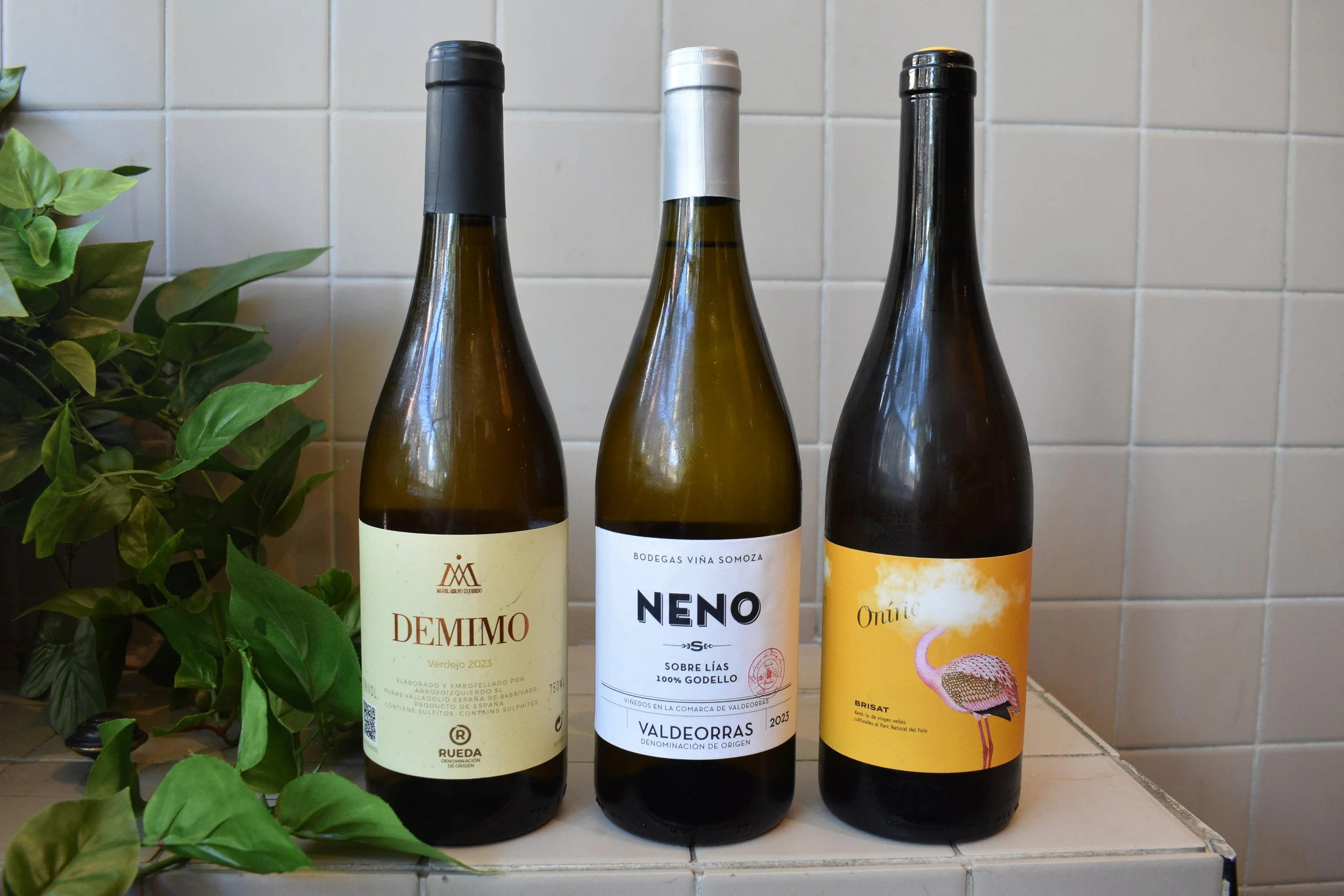
2023 Miguel Arroyo Izquierdo ‘Demimo’
Verdejo with a year or two on it, which is when the grape gets interesting.
$80bottle
2023 Miguel Arroyo Izquierdo ‘Demimo’
Verdejo with a year or two on it, which is when the grape gets interesting.
Rueda whites are usually drunk in their first summer. Give Verdejo a little bottle age and the grapefruit softens into quince and dried herbs, with a waxy, almost lanolin note arriving underneath. Medium bodied and dry, with the variety's bitter almond edge on the finish keeping everything upright and awake.
If you drink Australian
If you like the King Valley's Italian whites, Arneis and the better Pinot Grigio, the pear and almond texture is the same idea. This is drier and firmer, with more bite at the end.
If you drink French
A dry white Graves is the closest fit: waxy weight, citrus and a savoury finish with no oak shouting. This is leaner and more herbal, with a bitter twist Bordeaux never gives you.
Why it’s on the list
Aged white for eighty dollars is close to extinct in France, where any bottle time attached to a label comes with a keeping fee. Rueda still throws the extra year in for free.
Say it mee-GEL a-RRO-yo eeth-KYER-do de-MEE-mo
Next step in texture: Galician Godello built on lees, not age
Penedès2 wines
2022 Entre Vinyes Oníric Pet-Nat Blanc
Cloudy, grapey, gently fizzy. The bottle that gets a table talking in five minutes.
$100bottle
2022 Entre Vinyes Oníric Pet-Nat Blanc
Cloudy, grapey, gently fizzy. The bottle that gets a table talking in five minutes.
Pour it cloudy, that is the whole point. Muscat brings orange blossom and green grape skin, Macabeo keeps it dry and lemony underneath. The bubbles are soft and foamy rather than sharp, closer to cider than Champagne. Light-bodied, faintly savoury from the yeast, and it finishes dry and short in the best way.
If you drink Australian
If you like the pet-nats coming out of the Yarra and the Macedon Ranges, the cloudy texture and orchard fruit carry straight over. The difference is Muscat, which makes this more floral and grapey than most local versions.
If you drink French
Think of a pétillant naturel from Touraine in the Loire: same low-pressure fizz and rustic edge. This one is drier and more perfumed, with Muscat lift where the French version leans towards apple and lees.
Why it’s on the list
Nothing here is industrial: one harvest, one fermentation, bottled before it had finished. A grower Champagne with this much personality starts near $200 on a list like this, and most $100 sparkling is made in a tank by a machine.
Say it EN-tre VEE-nyes o-NEE-reek
Same hands, same fizz, Garnacha instead: the red-berry version of tonight's bottle
2022 Entre Vinyes Oníric ‘Sotaterra’ (skin contact)
A white grape made like a red: amber, grippy, and built for jamón.
$110bottle
2022 Entre Vinyes Oníric ‘Sotaterra’ (skin contact)
A white grape made like a red: amber, grippy, and built for jamón.
Macabeo left to sit on its skins, so the colour is amber-gold and the texture has a light grip, like cold tea. Dried apricot, quince and orange peel, with a herbal, faintly bitter edge underneath. Medium-bodied and dry, more savoury than fruity, and it finishes with a tannic tug that almost no white wine gives you.
If you drink Australian
If you like the textural Adelaide Hills whites made with a bit of skin time, the grip will feel familiar. This goes further: deeper colour, more dried fruit and tea leaf, less bright citrus.
If you drink French
The nearest French cousins are skin-contact Chenin from the Loire and the oxidative whites of the Jura. Same nutty, savoury character, though this stays brighter and more Mediterranean, apricot rather than walnut.
Why it’s on the list
Orange wine from the cult Australian names now runs $90 to $120 in a bottle shop before a restaurant marks it up. This is the same craft applied to an old Mediterranean grape, priced so you can order it out of curiosity rather than ceremony.
Say it EN-tre VEE-nyes o-NEE-reek so-ta-TE-rra
Another Spanish skin-contact white, lighter and more floral, from old Albillo vines
Monterrei2 wines
2020 Quinta da Muradella ‘Candea’ Blanco
Five years old and still tight. Galicia's rare white grapes, taken seriously.
$90bottle
2020 Quinta da Muradella ‘Candea’ Blanco
Five years old and still tight. Galicia's rare white grapes, taken seriously.
Three native Galician grapes you have almost certainly never met, from the warm inland corner of Galicia on the Portuguese border. Green apple and lemon pith first, then something waxier with air: chamomile, crushed stone, a little beeswax that only comes with bottle age. Medium-bodied and dry, the acid firm rather than sharp, finishing long and faintly bitter like grapefruit skin.
If you drink Australian
If you like Clare Valley Riesling with five years on it, the pay-off is the same: a bright wine gone waxy and complex with time. Here the fruit runs apple rather than lime, and there is no kerosene note.
If you drink French
Sits close to a Chablis with a few years in bottle: the same stony, lemon-and-oyster-shell profile and firm acid. This is a touch rounder and more herbal, with no oak influence anywhere in it.
Why it’s on the list
A Chablis premier cru with five years of age starts around $130 on a Melbourne list, and most kitchens never bother holding one that long. This is already there, from a grower who has spent his career rescuing grapes nobody else wanted, at $90.
Say it KEEN-ta da moo-ra-DEL-ya kan-DE-a Galician-Portuguese: 'da', not 'de'; -lla is 'lya' as in million.
Same Galician backbone in Godello, younger and creamier from its lees ageing
2023 Adegas Valmiñor ‘Minius’
Godello: the Galician white for anyone who finds Albariño a bit shrill.
$110bottle
2023 Adegas Valmiñor ‘Minius’
Godello: the Galician white for anyone who finds Albariño a bit shrill.
Godello sits somewhere between Chardonnay and Pinot Gris in feel. Ripe pear and white peach, a squeeze of lime, and an almond-skin note underneath. Medium-bodied with real weight through the middle of the mouth, then a clean, salt-edged finish. Dry and unoaked, and rounder than most Spanish whites Australians have tried.
If you drink Australian
If you like Mornington Peninsula Chardonnay when the oak is dialled back, this is the Spanish version: same stone fruit, same mouthfeel. The difference is no barrel at all, so the texture comes from the grape rather than the wood.
If you drink French
Think unoaked white Burgundy from the Mâconnais: pear, weight, a soft landing. This is drier and saltier, with a mineral edge that comes from Galicia's granite rather than Burgundian limestone.
Why it’s on the list
Godello is the grape Spanish sommeliers drink at home and the rest of the world has not priced in yet. A Mâcon with this much texture is a $140 list wine here; this does the same work for less.
Say it a-DE-gas bal-mee-NYOR MEE-nyoos Adegas is Galician for bodegas — 'a-DE-gas', not 'bo-DE-gas'.
Neighbouring Galician blend, more aromatic and citrus-driven, with the same salt-air finish
Bierzo2 wines
2022 Mengoba ‘Brezo’ Blanco
Godello with a rare local partner, from Bierzo's cool mountain bowl. Texture over fireworks.
$135bottle
2022 Mengoba ‘Brezo’ Blanco
Godello with a rare local partner, from Bierzo's cool mountain bowl. Texture over fireworks.
Godello does the heavy lifting: pear, white peach and a lick of hazelnut, with real weight for a wine that never tastes oaky. Doña Blanca adds acid and a herbal edge that stops it going soft. Medium bodied, gently creamy through the middle, finishing dry and faintly stony.
If you drink Australian
If you like Gippsland Chardonnay, the orchard fruit and creamy middle will feel familiar. The finish is the surprise: dry and slate like rather than the citrus and oak you would expect.
If you drink French
Closest in shape to a village Saint Aubin or a good Rully. White Burgundy weight without the heavy oak, plus more herbs and a cooler, drier landing than the Côte Chalonnaise usually gives.
Why it’s on the list
Godello is the grape white Burgundy drinkers defect to. What it does here for entry level Mâcon money would cost you double from the Côte de Beaune, and this has more going on than either.
Say it men-GO-ba BRE-tho
Godello from Monterrei, leaner and more citrus driven than this Bierzo version
2024 Castro Ventosa ‘El Val’ Godello
Poured blind against Chassagne-Montrachet, the table picked this as the Burgundy.
$270bottle
2024 Castro Ventosa ‘El Val’ Godello
Poured blind against Chassagne-Montrachet, the table picked this as the Burgundy.
Godello from Bierzo, where the Castro Ventosa family have grown grapes since the 1750s. Pear and white peach, a hazelnut note off the lees, then a mineral spine that runs the whole length of it. Broad through the mouth, dry at the end, with a finish that keeps revealing itself.
If you drink Australian
The best Yarra and Adelaide Hills Chardonnay chases exactly this, weight without heaviness and oak you can feel but not taste. Godello lands drier and more mineral, less stone fruit and more pear and nut.
If you drink French
Chassagne-Montrachet, and not as a figure of speech. The importer served the two blind alongside each other and the table called this one the Burgundy.
Why it’s on the list
Godello is the grape making Spain's case against white Burgundy, and this is one of the wines arguing it. From the oldest house in Bierzo, working ground their family has held since the 1750s. Village Chassagne with this much presence opens around $180 and climbs steeply from there.
Say it KAS-troh ven-TOH-sa, el BAL
Bierzo Godello at the start of the road, from a neighbouring grower.
Valdeorras2 wines
2023 Viña Somoza ‘Neno’ Sobre Lías
Godello from its home turf, left on lees for texture. Ninety dollars, and it holds serious company.
$90bottle
2023 Viña Somoza ‘Neno’ Sobre Lías
Godello from its home turf, left on lees for texture. Ninety dollars, and it holds serious company.
Sobre lías means it sat on its spent yeast, and you can taste the payoff: a soft, almost creamy weight wrapped around lemon and green pear. Valdeorras is Godello's heartland and its slate soils give a dry, flinty finish that stops the roundness turning flabby. Light to medium bodied, dry, easy without being simple.
If you drink Australian
If you like Yarra Valley Chardonnay in the leaner, lightly oaked style, this is the same idea from another grape. Orchard fruit and lees texture, minus the vanilla and the butter.
If you drink French
A Mâcon Villages equivalent, only drier and stonier. Same friendly weight and quiet richness, but with a flinty Galician finish and no oak in the picture at all.
Why it’s on the list
This is the bottle that quietly outperforms its price all night. The Burgundy that gives you this much texture starts well above it, and most whites at ninety dollars give you half the mouthfeel.
Say it BEE-nya so-MO-tha NE-no
Old Galician varieties with more age, texture and savoury complexity than this
2024 Rafael Palacios ‘As Sortes’
The wine that put Spanish white on the same table as Meursault.
$300bottle
2024 Rafael Palacios ‘As Sortes’
The wine that put Spanish white on the same table as Meursault.
Six parcels, under four hectares between them, vines of forty to fifty years, each plot fermented separately in oak vats before assembly. White peach and lemon oil, toasted almond, a chalky grip through the middle, then a saline finish that runs well past where you expect it to stop. Dense and quiet rather than showy.
If you drink Australian
There is no exact Australian match. The closest in ambition is a single-site Chardonnay from a grower like Bindi or Giant Steps, one small piece of ground made to age. Godello brings more salt and less butter.
If you drink French
Meursault, and the comparison is not flattery, it is just accurate. Same breadth, same nut and citrus, same slow reveal. This is drier and more mineral, and it holds its acid further into the finish.
Why it’s on the list
Rafael Palacios left his family's Priorat estate to make white wine in Valdeorras, and this is the wine that decision was for. Under four hectares across six parcels. Meursault of comparable seriousness opens near $350 and climbs from there. This is the top of Spanish white.
Say it ra-fa-EL pa-LA-thyos, ass SOR-tess
Valdeorras Godello at the start of the road this one finishes.
Bizkaiko Txakolina1 wine
2024 Gorrondona Txakoli
The Basque coast in a glass. Salty, spritzy, and it disappears alarmingly fast.
$80bottle
2024 Gorrondona Txakoli
The Basque coast in a glass. Salty, spritzy, and it disappears alarmingly fast.
Txakoli comes from the wet, green Basque coast and tastes like it: green apple, lime, a lick of sea salt and a faint prickle of spritz on the tongue. Light bodied, low in alcohol, very high in acid. The finish is short, clean and tart, which is exactly the point. Built for a second glass.
If you drink Australian
If you like Great Southern Riesling for its lime and acid, this is a rowdier relation. Lower in alcohol, slightly fizzy, and more saline than citrus, without any of Riesling's floral perfume.
If you drink French
If you like Muscadet you will feel at home: low alcohol, high acid, salt on the finish, made to be drunk with shellfish rather than pondered. Txakoli is a shade more citrusy and lightly spritzy.
Why it’s on the list
Eighty dollars on a Melbourne list usually buys something familiar. This is more interesting, far more useful at the table, and it comes from a place nobody has heard of.
Say it go-rron-DO-na cha-ko-LEE Basque tx is 'ch'; the region is 'bees-KY-ko cha-ko-LEE-na'.
Next door in Galicia, same salt and citrus, with more flesh.
Cebreros1 wine
2023 El Galayo Blanco ‘Especial’ (skin contact)
Orange wine with the volume turned down. Granite, apricot skin, a gentle grip.
$75bottle
2023 El Galayo Blanco ‘Especial’ (skin contact)
Orange wine with the volume turned down. Granite, apricot skin, a gentle grip.
Albillo Real left on its skins, which gives colour and a light tannic grip without tipping the wine into cider territory. Apricot skin, dried mountain herbs, orange peel and a stony dryness that comes with granite country in the Gredos. Medium bodied with genuine texture, a faint tug of tannin on the tongue, then a clean savoury finish.
If you drink Australian
If you like the skin contact whites coming out of Basket Range in the Adelaide Hills, this is the calmer relative. Same grip and texture, but mountain herbs and stone fruit rather than funk.
If you drink French
There is no exact French equivalent, so think of a dry Jura white with grip: savoury, nutty, faintly oxidative in feel, and best treated at the table as a light red rather than a white.
Why it’s on the list
Seventy five dollars for a hand made skin contact wine off granite at altitude is honest work. The Jura equivalent starts higher, and most natural wine list darlings cost more and taste wilder for less reason.
Say it el ga-LA-yo es-pe-THYAL
The red side of the same trick: pale, textural, built for food
Jumilla1 wine
2024 Bodega Cerrón ‘Remordimiento’ Blanco
Chardonnay from Jumilla, which should not work. Remordimiento means regret. None here.
$85bottle
2024 Bodega Cerrón ‘Remordimiento’ Blanco
Chardonnay from Jumilla, which should not work. Remordimiento means regret. None here.
Chardonnay in the middle of Monastrell country, rescued by altitude on the Jumilla plateau where the nights turn cold. Nectarine and lemon curd with a touch of white blossom, and no oak getting in the way. Medium bodied, sunnier and rounder than cool climate Chardonnay, with a clean citrus line running underneath. Finishes dry and pleasantly bitter.
If you drink Australian
If you like unoaked Margaret River Chardonnay, this is that wine with more sunshine in it. Same nectarine and citrus, but a broader, softer middle and a drier, more savoury close.
If you drink French
Limoux in the Languedoc is where France grows Chardonnay in the sun, and the shape is the same: ripe orchard fruit, easy weight, no oak. This is firmer and drier on the finish.
Why it’s on the list
Chardonnay is the most expensive word in wine, unless it is grown somewhere nobody expects. Eighty five dollars here buys fruit quality that costs half again from Margaret River and double from Burgundy.
Say it bo-DE-ga theh-RRON rre-mor-dee-MYEN-to Peninsular c is 'th'; Latin Americans would say 'seh-RRON'.
Same house, same fresh hand, Monastrell and Garnacha instead of Chardonnay
Terra Alta1 wine
2023 Edetària ‘Via Terra’ Blanc
Terra Alta grows more Garnacha Blanca than anywhere on earth. This is the way in.
$70bottle
2023 Edetària ‘Via Terra’ Blanc
Terra Alta grows more Garnacha Blanca than anywhere on earth. This is the way in.
Garnatxa Blanca is the quiet achiever of Spanish whites: not especially aromatic, but wide and satisfying once it is in your mouth. Green apple, fennel and a little grapefruit pith, a soft and almost creamy weight, and gentle rather than sharp acidity. Medium bodied and dry, finishing on bitter herbs and a saline note rather than fruit.
If you drink Australian
If you like Victorian Marsanne from Nagambie Lakes, the weight without heaviness will be familiar. This is drier and more herbal, with an anise note Australian whites rarely bother to offer.
If you drink French
This is the same grape the southern Rhône calls Grenache Blanc, so think white Côtes du Rhône. Terra Alta gives it more freshness and a saltier finish than most of them manage.
Why it’s on the list
Seventy dollars for a wine that drinks like a much more expensive white. The southern Rhône equivalent costs more and often tastes flatter, because Terra Alta has the altitude and the sea breeze it lacks.
Say it e-de-TA-ree-a BEE-a TE-rra BLANG Catalan: the final -c in Blanc is swallowed, closer to 'blang'.
Same grape in Priorat, taken seriously: more depth, more stone, more money
Priorat1 wine
2023 Terroir al Límit ‘Històric’ Blanc
Priorat white, which barely exists. Slate, herbs and quiet power.
$135bottle
2023 Terroir al Límit ‘Històric’ Blanc
Priorat white, which barely exists. Slate, herbs and quiet power.
Priorat makes almost no white wine, so this is rare before you even taste it. Yellow plum and fennel, dried hillside herbs, and a chalky, stony line running the whole length from the region's black slate soils. Medium to full-bodied and dry, with weight rather than fat, and a long finish that turns savoury and slightly bitter.
If you drink Australian
If you like Margaret River Chardonnay more for its structure than its fruit, you will follow this easily. Same seriousness and length, but the flavours run herbal and stony instead of grapefruit and oak.
If you drink French
The closest thing is a white Châteauneuf-du-Pape or a serious Roussillon white: sun-grown but built around structure. This is leaner and more mineral, the soil showing through more clearly than the ripeness.
Why it’s on the list
White Châteauneuf of this standing lands between $180 and $250 on a Melbourne list, and Priorat whites are made in tiny volumes by people who could earn more making red. At $135 this is the cheapest genuinely rare wine on the list.
Say it te-RWAR al LEE-meet ees-TO-reek BLANG Catalan: H in Històric is silent; final t in Límit barely sounds.
Same Garnatxa Blanca grape from Terra Alta, softer and far cheaper
Tinto Red
Two thirds of the list. Mencía and Garnacha at the light end, Toro and Priorat at the other.
Rioja15 wines
2024 Bodegas Exopto Tinto
Rioja bottled young and purple, before anybody starts thinking about barrels.
$85bottle
2024 Bodegas Exopto Tinto
Rioja bottled young and purple, before anybody starts thinking about barrels.
Bright purple in the glass and just as direct on the nose: blackberry, violets, a twist of black pepper that is the Graciano talking. Garnacha rounds out the middle, Tempranillo gives it bones. Light to medium bodied, soft tannin, a fresh peppery finish. A 2024 means this is still all fruit, which is the point.
If you drink Australian
If you like Canberra District Syrah for its pepper and its lightness, this hits the same nerve. Same medium weight and peppery lift, but with rounder red fruit and none of the smoke.
If you drink French
Close to Crozes-Hermitage in spirit: peppery, medium bodied, made to drink now. The difference is Spanish, softer tannin and rounder fruit instead of the Rhône's iron and olive.
Why it’s on the list
Young, unfussy Rioja is one of the last great deals in wine. The Crozes that tastes this alive starts near $100 and asks you to wait two years. This one is ready tonight for $85.
Say it bo-DE-gas ek-SOP-to
Same young and juicy idea from Bierzo, with Mencía's floral, cooler edge.
2024 Artuke Tinto
Rioja with the barrel taken away: whole bunch, vivid purple, best out of the fridge.
$95bottle
2024 Artuke Tinto
Rioja with the barrel taken away: whole bunch, vivid purple, best out of the fridge.
Whole bunches fermented the old Rioja Alavesa way, so it arrives vivid: crushed raspberry, a lick of liquorice, something floral like violets. No oak anywhere in the way. Light to medium bodied, tannin as soft as a fingerprint, finishing on juicy acidity. Rioja behaving like a young wine, because that is exactly what it is.
If you drink Australian
If you like Yarra Valley Gamay or a lighter whole bunch Pinot, this is your bottle. Same crunch, same drink now energy, with Tempranillo's savoury, faintly dusty edge underneath.
If you drink French
Beaujolais cru, near enough: Brouilly or Fleurie made with the same carbonic trick. The difference is that Tempranillo brings more earth and far less banana sweetness to the party.
Why it’s on the list
Cru Beaujolais made this carefully starts around $120 on a Melbourne list and climbs fast. Artuke is one of Rioja Alavesa's most serious young estates, and this is their most honest bottle at $95.
Say it ar-TOO-ke
Galicia's version of the trick: young, unoaked Mencía, also best served cool.
2021 Manuel Quintano ‘Labastida’ Crianza
A proper Rioja Crianza for $80, from the village where barrel-aged Rioja began.
$80bottle
2021 Manuel Quintano ‘Labastida’ Crianza
A proper Rioja Crianza for $80, from the village where barrel-aged Rioja began.
Crianza means at least a year in barrel and two years all up before release, and you can taste the patience: red cherry, dried strawberry, a little vanilla and cedar, a leathery savoury note at the back. Medium bodied, tannin already soft, finishing dry and dusty rather than sweet. Classic Rioja with no makeup on.
If you drink Australian
If you like Coonawarra Cabernet for its cedar and its cut, this is the Spanish parallel: same savoury oak, same firm line. The fruit here is red and dried instead of blackcurrant.
If you drink French
A cru bourgeois Médoc does similar work, structure with a bit of barrel polish on top. Rioja gets there with softer tannin and more dried fruit, and it is drinkable years earlier.
Why it’s on the list
Crianza is the great sleeper category: three years of somebody else's barrel and cellar costs are already inside this $80. A Bordeaux with the same age and polish does not exist here under $110.
Say it ma-NWEL keen-TA-no la-bas-TEE-da
Same Crianza rules, darker Toro fruit, more muscle, a small step up.
2023 Manuel Quintano ‘Q de Quintano’
The Quintano house without the barrel: young Tempranillo, all fruit and lift.
$90bottle
2023 Manuel Quintano ‘Q de Quintano’
The Quintano house without the barrel: young Tempranillo, all fruit and lift.
Tempranillo caught early, before oak has much to say about it. Red plum, morello cherry and a faint tomato leaf greenness that is very Tempranillo, then a chalky savoury finish. Medium bodied, brisk acidity, tannin fine and quiet. A 2023 drinking beautifully now and in no danger for a few years yet.
If you drink Australian
If you like King Valley Sangiovese, this is a close cousin: sour cherry, dry finish, built for food rather than for showing off. Tempranillo simply gives you more flesh in the middle.
If you drink French
Chinon is the shape to picture: bright red fruit with a leafy savoury edge and a dry finish. This is riper and rounder, and without Cabernet Franc's pencil shaving bite.
Why it’s on the list
Odd but true, the young one costs more than the house Crianza, because you are paying for fruit rather than barrel time. If you want to taste Labastida before oak gets involved, this is the $90 that shows you.
Say it ma-NWEL keen-TA-no, KOO de keen-TA-no The letter Q is 'koo' in Spanish, so 'KOO de keen-TA-no'.
Same young Rioja idea taken further: whole bunch, even more crunch.
2021 Manuel Quintano ‘El Pionero’
Named for the man who first carted Bordeaux barrels into Rioja, back in the 1790s.
$90bottle
2021 Manuel Quintano ‘El Pionero’
Named for the man who first carted Bordeaux barrels into Rioja, back in the 1790s.
Oak has been part of Labastida since that first experiment, and here it works as seasoning rather than sauce. Dark cherry and dried fig, cedar, tobacco leaf, a little sweet earth underneath. Medium to full bodied with real tannin structure and a long, savoury, faintly smoky finish. Serious without ever feeling heavy.
If you drink Australian
If you like Hunter Valley Shiraz for the way it stays medium weight and turns earthy with age, this is the Spanish equivalent: savoury, structured, more about texture than sheer fruit.
If you drink French
Right Bank Bordeaux is the honest comparison, which is fitting given the history in the name. Similar plush middle and cedar, but Tempranillo finishes drier and dustier than Merlot ever does.
Why it’s on the list
You are drinking a piece of wine history for $90. The Saint-Émilion that gives you this much structure and savour starts at $140 and usually wants another five years in the cellar.
Say it ma-NWEL keen-TA-no el pyo-NE-ro
Same house, three more years of cellar time already done for you.
2020 Marqués de Vargas Reserva
Classical Rioja, polished rather than powerful.
$125bottle
2020 Marqués de Vargas Reserva
Classical Rioja, polished rather than powerful.
Mostly Tempranillo with Mazuelo and Garnacha behind it, and close to two years in oak. Ripe cherry and blackberry, sweet spice, vanilla and tobacco, a balsamic thread running underneath. The tannins are silky, the finish is long. Structured, but the weight of it falls on balance rather than force.
If you drink Australian
If you drink Coonawarra or Margaret River Cabernet for the polish rather than the power, this is the same instinct in a different grape. Softer through the middle, with more sweet spice off the oak.
If you drink French
Mid-weight Bordeaux from a good year, or a Châteauneuf with some age. The oak signature here is more obvious than in either, and that is the Rioja part.
Why it’s on the list
A Reserva is a wine the estate has already aged for you, in barrel and then in bottle, before it goes anywhere near a table. The 2020 is drinking now with years still in front of it. This is the classical end of Rioja done properly, and the place to start before spending more.
Say it mar-KESS deh VAR-gas
Rioja in the same classical register, a step earlier.
2018 Manuel Quintano ‘Labastida’ Reserva
Eight years old and ready. Reserva is Rioja's promise that the waiting is already done.
$130bottle
2018 Manuel Quintano ‘Labastida’ Reserva
Eight years old and ready. Reserva is Rioja's promise that the waiting is already done.
Reserva means three years of ageing minimum before release, at least one of them in barrel, and 2018 was a cooler Rioja vintage, so this arrives fresh rather than tired. Dried cherry, orange peel, leather, sweet tobacco, a whiff of forest floor. Medium bodied, tannin resolved into silk, finishing long and savoury with a dry mineral edge.
If you drink Australian
If you like Margaret River Cabernet with five or six years on it, you will recognise all of this: resolved tannin, savoury complexity, fruit stepping back. Rioja gets there on red fruit rather than cassis.
If you drink French
Aged Bandol works the same leather and dried fruit register, with the same savoury persistence. Bandol brings more grip and a wilder edge; this is softer, sweeter fruited and more perfumed.
Why it’s on the list
This is the trick Rioja plays on everyone else: the cellaring is included in the price. A Bordeaux released with eight years already on it starts near $200, so $130 here is the best maths on the list.
Say it ma-NWEL keen-TA-no la-bas-TEE-da
The other Reserva here: younger, tighter, from Rioja Alta's cooler side.
2021 Valenciso ‘Laderas de Cabama’
Valenciso at its most graceful: a hillside Tempranillo built on lift, not muscle.
$95bottle
2021 Valenciso ‘Laderas de Cabama’
Valenciso at its most graceful: a hillside Tempranillo built on lift, not muscle.
Laderas means slopes, and it tastes like slope-grown fruit: red cherry, wild strawberry, dried rose, a cool chalky line running underneath. Light to medium bodied, tannin fine and powdery, more about texture than weight. It finishes clean and a little stony, the fruit fading into something savoury rather than sweet.
If you drink Australian
If you like Mornington Peninsula Pinot Noir, this is the same conversation in Spanish: perfume, fine tannin, medium weight. Tempranillo brings a dustier, more earthen finish than Pinot's sweeter red fruit.
If you drink French
A village Côte de Beaune red, in feel if not in grape. Both trade power for detail and both reward a big glass. This finishes drier, and costs a fraction of what Burgundy asks.
Why it’s on the list
Valenciso is one of Rioja Alta's most respected small houses and this is the cheapest way through the door. The Burgundy that gives you this much perfume and fine tannin starts at $200 on a restaurant list. This is $95.
Say it ba-len-THEE-so la-DE-ras de ka-BA-ma
Another high-slope red built on perfume and fine tannin, from volcanic Tenerife.
2020 López de Haro ‘El Pacto’
The modern face of Rioja: darker, glossier, and completely unapologetic about oak.
$130bottle
2020 López de Haro ‘El Pacto’
The modern face of Rioja: darker, glossier, and completely unapologetic about oak.
Rioja pointed at a wider audience, and it does the job well. Black cherry and blueberry, mocha and toasted spice from the barrel, a sweet vanilla edge running through. Full bodied by Rioja standards, tannin plush rather than firm, finishing warm and generous. Less dried fruit and leather than the traditional style, more polish and depth.
If you drink Australian
If you like modern McLaren Vale Shiraz, this is familiar ground: dark fruit, chocolate oak, plush texture. The difference is Tempranillo's acidity, which keeps the finish drier and much less sweet.
If you drink French
A serious Languedoc red, a Faugères or a Minervois La Livinière, works this same seam of dark fruit and oak polish. This has finer tannin and a longer, cooler finish behind it.
Why it’s on the list
A Napa Cabernet or a modern Bordeaux with this much gloss on it lands well north of $180. Rioja still sells polish cheaper than anywhere else, and $130 buys the whole show.
Say it LO-peth de A-ro el PAK-to H is always silent in Spanish: Haro is 'A-ro'.
Toro's answer to this: same dark fruit and oak, more raw power.
2020 López de Haro ‘San Vicente de la Sonsierra’
A village wine: every grape in this bottle comes from San Vicente de la Sonsierra.
$135bottle
2020 López de Haro ‘San Vicente de la Sonsierra’
A village wine: every grape in this bottle comes from San Vicente de la Sonsierra.
Rioja only recently let producers put a single village on the label, and this is what that rule was written for. San Vicente sits high on the north bank of the Ebro and the wine shows it: red and black cherry, dried herbs, iron and stone under the fruit. Medium to full bodied, firmer and cooler than the Rioja average, finishing long and mineral.
If you drink Australian
If you like Beechworth Shiraz for its granite tension and medium weight, this trades on the same thing: altitude, savour, structure ahead of sweetness. Tempranillo swaps the pepper for dried herb and iron.
If you drink French
Saint-Joseph territory: hillside fruit, medium weight, a mineral spine you can actually feel. This is less peppery and more earthen, with softer tannin and a broader middle to it.
Why it’s on the list
Village wines are where the value hides in every serious region, and Rioja is the last one nobody has bid up yet. A named-site Saint-Joseph with this much detail starts around $180.
Say it LO-peth de A-ro, san bee-THEN-te de la son-SYE-rra
Bierzo's great village wine: same idea, steeper slopes, Mencía instead of Tempranillo.
2020 Valenciso ‘Cemento’
Tempranillo raised in concrete, not oak. Rioja with nothing between you and the fruit.
$160bottle
2020 Valenciso ‘Cemento’
Tempranillo raised in concrete, not oak. Rioja with nothing between you and the fruit.
The name gives away the trick: concrete instead of barrel, so there is no vanilla, no cedar and no smoke anywhere in this wine. What is left is Tempranillo itself, dark cherry and plum, dried thyme, a wet stone coolness through the middle. Medium to full bodied, tannin firm and chalky, the finish long, dry and completely clean.
If you drink Australian
If you like the newer wave of unoaked Adelaide Hills Syrah, you already understand the appeal: fruit and site with nothing painted over the top. Tempranillo brings more tannin and a chalkier finish.
If you drink French
Think of what Chablis achieves by leaving oak out, then apply the same logic to red. The nearest French red in spirit is a tank-raised Loire red: pure, cool, savoury, though this carries far more tannin.
Why it’s on the list
You are paying for restraint, which is always the harder thing to sell. Barrel-free reds of this seriousness out of Burgundy or the Loire ask $200, and almost nobody in Rioja is brave enough to make one at all.
Say it ba-len-THEE-so the-MEN-to
Another Spanish red that skips the barrel to let the vineyard talk.
2020 Valenciso Reserva
The bottle Valenciso built its name on. If you order one Rioja tonight, order this.
$185bottle
2020 Valenciso Reserva
The bottle Valenciso built its name on. If you order one Rioja tonight, order this.
Reserva means three years of ageing minimum with at least one in barrel, and this is the classic Rioja Alta reading of the rule. Red cherry and dried orange, cedar, sweet tobacco, an undertow of leather and forest floor. Medium to full bodied, tannin polished into silk, and a finish that keeps unfolding long after you have swallowed.
If you drink Australian
If you like a benchmark Great Southern Cabernet with a few years on it, this is the same class of wine: structure, savour, patience. Rioja arrives softer, more perfumed, and ready far sooner.
If you drink French
Village Gevrey-Chambertin is the fair comparison for the silk and the savoury depth here. Burgundy would charge you double for it and then ask for another five years in the cellar.
Why it’s on the list
A red Burgundy this complete starts at $350 on a Melbourne list. Rioja's great houses have never charged Burgundy money, and $185 for a Reserva with this pedigree is why people who know wine keep buying Rioja.
Say it ba-len-THEE-so
Spain's other great splurge: Priorat power where this one offers Rioja finesse.
2019 La Rioja Alta ‘Viña Ardanza’ Reserva
One of the pillars. Rioja as it has been made for eighty years.
$210bottle
2019 La Rioja Alta ‘Viña Ardanza’ Reserva
One of the pillars. Rioja as it has been made for eighty years.
Tempranillo with a good share of Garnacha, years in used American oak, racked by hand every six months. Strawberry and dried fig, sweet spice, cedar and a curl of coconut off the old barrels, then the floral lift the Garnacha brings. Silky rather than firm, and open for business now.
If you drink Australian
Ardanza sits in Rioja roughly where Grange and Hill of Grace sit in Australian Shiraz, a bottle you have to know to say you know the place. The style is nothing like either. Dried fruit and sweet spice, not power.
If you drink French
Châteauneuf with some age on it, for the Garnacha warmth and the dried-fruit sweetness. The American oak takes it somewhere French wine does not go, into coconut and vanilla, and that is the Rioja signature exactly.
Why it’s on the list
A reference bottle. La Rioja Alta has made Ardanza since 1942 and the method has barely moved since. No new oak at any stage, just long patient years in old American barrels and a hand-racking every six months. If someone at the table wants to understand what Rioja means, this is the one you open.
Say it la ree-OH-hah AL-ta, VEEN-ya ar-DAN-tha
The same traditional method, at the start of the range.
2017 La Rioja Alta ‘Viña Arana’ Gran Reserva
The Bordeaux-shaped one. Structured, savoury, built to wait.
$255bottle
2017 La Rioja Alta ‘Viña Arana’ Gran Reserva
The Bordeaux-shaped one. Structured, savoury, built to wait.
Gran Reserva means years in barrel and years more in bottle before the winery lets it go. Tempranillo with Graciano, all of it in used oak. Dried cherry, tobacco leaf, leather, a balsamic edge underneath. The tannin is drier and more architectural than Ardanza and the finish runs savoury rather than sweet.
If you drink Australian
Coonawarra Cabernet with a decade on it has this shape, cedar and structure and dried dark fruit. Arana is lighter on its feet and more savoury, and its tannin comes from time rather than from new wood.
If you drink French
Left Bank Bordeaux at ten or twelve years old. Same cedar, same graphite line, the same insistence on structure ahead of fruit. Tempranillo makes it a little softer through the middle.
Why it’s on the list
Ardanza and Arana are the two halves of traditional Rioja. Ardanza is the generous one, Arana the serious one, and drinking them side by side is the fastest education in the region there is. A Gran Reserva has been held back by the winery for years before release, so what you are buying is patience somebody else has already paid for. Classed-growth Bordeaux carrying this much bottle age starts well above $300.
Say it la ree-OH-hah AL-ta, VEEN-ya a-RA-na
Modern Rioja built on the same insistence on structure.
2022 Artuke ‘El Escolladero’
Rioja that drinks like the Northern Rhône. Nothing about it is traditional.
$320bottle
2022 Artuke ‘El Escolladero’
Rioja that drinks like the Northern Rhône. Nothing about it is traditional.
A single site in Rioja Alavesa planted in the 1950s, mostly Tempranillo with Graciano running through it, raised with a small share of new French oak. Black fruit, cracked pepper, olive and iron, a floral lift over the top. The tannin is fine and long rather than heavy. Savoury from the first sip to the last.
If you drink Australian
If Northern Rhône Syrah is your thing, or the cooler Grampians and Canberra Shiraz that follows it, this is the Spanish version of the same argument. Pepper, iron and lift, with tannin that lasts.
If you drink French
Cornas and Saint-Joseph, straightforwardly. Same pepper, same iron, same savoury weight. Tempranillo adds a red-earth note that Syrah does not have.
Why it’s on the list
Artuke is the name Rioja talks about now. Tim Atkin made Arturo de Miguel his winemaker of the year, and this single site is where that reputation sits. It is the least Rioja-tasting Rioja on the list, and the one to open for someone who thinks they already know the region. Northern Rhône with this much detail starts around $300 and rises quickly.
Say it ar-TOO-keh, es-ko-ya-DEH-roh
Another Rioja that walks away from the region's house style.
Toro5 wines
2022 Estancia Piedra ‘Joven Ecológico’
Organically grown Toro, unaged and unafraid. Tempranillo with the volume turned right up.
$80bottle
2022 Estancia Piedra ‘Joven Ecológico’
Organically grown Toro, unaged and unafraid. Tempranillo with the volume turned right up.
Tinta de Toro is Tempranillo that grew up somewhere hotter and higher, with thicker skins and darker everything. Joven means no barrel ageing, so this is the raw material: blackberry, black plum, a lick of liquorice, a note of dried violet. Full bodied and dense without being clumsy, tannin chewy, the finish warm and dark. Organically farmed, as the label says.
If you drink Australian
If you like Heathcote Shiraz for its density and dark fruit, Toro will feel like home. The difference is a firmer, grippier tannin and a drier finish instead of plush sweetness.
If you drink French
Cahors is the closest French cousin: dark, dense, built on tannin and grit rather than charm. This is warmer and rounder, with more sun in the fruit and less ink in the tannin.
Why it’s on the list
Nothing else in Spain hands you this much weight for $80. The Cahors or Madiran with comparable power costs $110, tastes half as generous, and makes you wait three years for it to soften.
Say it es-TAN-thya PYE-dra HO-ben e-ko-LO-hee-ko Joven's j is throaty, like Scottish loch — 'HO-ben', not 'JOH-ven'.
Same grape, same town, different house: a useful side-by-side on Toro.
2021 Estancia Piedra ‘Crianza Ecológico’
Toro's answer to a big Barossa red, farmed organically and aged in oak. Warm and generous.
$105bottle
2021 Estancia Piedra ‘Crianza Ecológico’
Toro's answer to a big Barossa red, farmed organically and aged in oak. Warm and generous.
Tinta de Toro is Tempranillo that moved somewhere hot and grew broad shoulders. Black plum, dried fig, sweet leather and a dusting of cocoa from the barrel. Full bodied and warm, with tannin that grips and then softens, and a little Garnacha lifting the middle. Finishes long and savoury rather than sweet.
If you drink Australian
If you like Clare Valley Shiraz, the dark fruit, firm structure and dry finish carry straight over. Toro is warmer and dustier, with leather and cocoa where Clare gives you mint and blackberry.
If you drink French
If you drink Gigondas or a good Côtes du Rhône Villages, the sun-baked dark fruit and warmth are familiar. Toro is denser and more tannic, with less black pepper and more leather.
Why it’s on the list
Organic farming, real time in oak and this much concentration out of France would be a $150 Châteauneuf on a list like this. Toro remains Spain's least fashionable big red, which is exactly why it lands at $105.
Say it es-TAN-thya PYE-dra e-ko-LO-hee-ko
Toro without the oak, older vines, pure dark fruit
2022 Matsu ‘El Pícaro’
The young rascal on the label says it all. Toro with the volume up.
$85bottle
2022 Matsu ‘El Pícaro’
The young rascal on the label says it all. Toro with the volume up.
Deep purple, close to opaque. Smells of blackberry, violets and a curl of smoke, with a short spell in barrel adding vanilla rather than grip. Medium to full bodied, plush through the middle, tannin fine enough that it drinks beautifully tonight. Finishes on dark plum and black pepper.
If you drink Australian
If you like Barossa Shiraz, the plush dark fruit and gentle spice land in the same place. This is fresher and drier through the finish, with less chocolate and more black pepper.
If you drink French
Think a young Cornas or Crozes-Hermitage for the smoke and dark berry. Toro brings more flesh and less black-olive savouriness, and it needs no cellaring at all to be delicious.
Why it’s on the list
At $85 it does the work of a $120 Barossa Shiraz, and Toro's old bush vines cost a fraction of what Barossa dirt does. The cheapest way on this list to put something genuinely big on the table.
Say it MA-tsoo el PEE-ka-ro
Same house, older vines, deeper and slower. The natural step up
2021 Matsu ‘El Recio’
Same house as El Pícaro, older vines, more barrel. Serious now, not just big.
$120bottle
2021 Matsu ‘El Recio’
Same house as El Pícaro, older vines, more barrel. Serious now, not just big.
Darker and slower than its little brother. Black cherry, dried herbs, cedar and a toasty, smoky edge from longer time in oak. Full bodied with real tannin structure, firm across the middle, but the fruit is ripe enough to carry it easily. Long finish of liquorice and tobacco leaf.
If you drink Australian
If you like Heathcote Shiraz, the mix of ripe dark fruit and firm structure is familiar territory. Toro is drier and more leathery, and the oak here reads as cedar rather than sweet vanilla.
If you drink French
Sits near a good Madiran for the tannin and the dark, savoury fruit. Toro is warmer and rounder, with sweeter fruit and less of Madiran's austere iron-filing bite.
Why it’s on the list
Old vines, a long spell in barrel and enough structure to keep for a decade: the Barossa equivalent is a $180 single-vineyard Shiraz. Toro carries no fashion premium, which is the whole point of this page.
Say it MA-tsoo el RRE-thyo
Toro from a legend, seven years old, fruit over oak
2018 Telmo Rodríguez ‘Dehesa Gago’
Spain's great vineyard hunter makes a Toro that runs on fruit, not oak.
$145bottle
2018 Telmo Rodríguez ‘Dehesa Gago’
Spain's great vineyard hunter makes a Toro that runs on fruit, not oak.
Telmo Rodríguez built a career reviving forgotten Spanish vineyards, and this is his Toro: black cherry and blackberry, dried thyme, a graphite edge underneath. Full bodied but nimble for the region, tannin sanded smooth by seven years in bottle. The finish is dry, stony and long.
If you drink Australian
If you like Canberra Syrah, the savoury, peppery, medium-weight approach to a warm-climate red will make sense here. Toro swaps the pepper for dried herb and dust, and pushes deeper and darker.
If you drink French
Closest to a mature Cahors: same inky colour, same dry dusty tannin, same refusal to be plush. Toro's fruit is riper and its finish warmer, but the bones are identical.
Why it’s on the list
Seven years of bottle age is the expensive part, and almost nobody hands it to you at $145. A Northern Rhône of the same age and pedigree lands nearer $250, and it would still need coaxing.
Say it TEL-mo rro-DREE-geth de-E-sa GA-go Silent h inside Dehesa: say 'de-E-sa', two clean vowels.
Another old-vine site wine, cooler and finer, same serious hand
Bierzo4 wines
2023 César Márquez ‘Parajes’
Mencía is Spain's Cabernet Franc. Start here, then order it forever.
$90bottle
2023 César Márquez ‘Parajes’
Mencía is Spain's Cabernet Franc. Start here, then order it forever.
If you have never had Mencía, picture Cabernet Franc grown somewhere cooler and stonier. Red cherry and raspberry, a snap of crushed violet, then black pepper and something leafy underneath. Light to medium-bodied, the tannins fine and dusty rather than drying, with bright acid keeping the whole thing lively. It finishes savoury and mineral, never sweet.
If you drink Australian
If you like Yarra Valley Pinot Noir, this drinks in the same register: red fruit, modest weight, fine tannin, plenty of acid. The difference is a peppery, leafy, savoury streak that Pinot rarely offers.
If you drink French
Chinon is the reference point. Same red-berry and leafy-herb profile, same freshness and slim build, but the slate hills of Bierzo add a stony grip and more black pepper than the Loire usually gives.
Why it’s on the list
A named-grower Chinon runs $95 to $120 here and a Yarra Pinot with this much detail starts around $110. Bierzo delivers the same experience from a region Australia has not caught on to yet, which is exactly why it is $90.
Say it THE-sar MAR-keth pa-RA-hes
Mencía from Ribeira Sacra's river cliffs, lighter and more floral than Bierzo
2023 Mengoba ‘Brezo’ Tinto
The house red you wish your local had. Juicy, peppery, gone by nine.
$75bottle
2023 Mengoba ‘Brezo’ Tinto
The house red you wish your local had. Juicy, peppery, gone by nine.
Mencía brings the red cherry and the pepper. Garnacha Tintorera brings colour and a darker plummy depth, since it is one of the few grapes with red flesh as well as red skin. Medium-bodied and unfussy, with soft tannin and juicy acid, a lick of liquorice, and a fresh finish that quietly asks for another glass.
If you drink Australian
If you like young McLaren Vale Grenache, the juicy red fruit and easy tannin will feel familiar straight away. This is cooler and more peppery, with less sweetness and a good deal more acid at the finish.
If you drink French
It sits very close to a Beaujolais cru like Morgon: bright, gluggable, with real fruit and a savoury edge. Bierzo gives a little more colour and grip than Gamay usually manages.
Why it’s on the list
This is the least you can spend at Anada on a red made by a properly serious grower. The Morgon that drinks like this is $30 more, every single time.
Say it men-GO-ba BRE-tho
Same grape, same region, more detail and lift when stepping up
2022 Bodegas Pittacum ‘Petit Pittacum’
Mencía with the volume turned down. Dark cherry, wet slate, no makeup.
$90bottle
2022 Bodegas Pittacum ‘Petit Pittacum’
Mencía with the volume turned down. Dark cherry, wet slate, no makeup.
This is Mencía with the emphasis on fruit and soil rather than barrel. Dark cherry and pomegranate, dried herbs, and a graphite note like wet stone after rain. Medium-bodied with firm, fine tannin and a savoury middle that keeps it honest. It finishes dry and long, closer to bitter cherry than to jam.
If you drink Australian
If you like cool-climate Canberra Syrah, this shares the pepper, the fine tannin and the dark red fruit. It is lighter and more mineral, with none of the smoked-meat character Syrah brings.
If you drink French
Think Saumur-Champigny: red-fruited, structured, faintly herbal Cabernet Franc grown on limestone. Bierzo swaps that limestone for slate, which pushes the wine darker and stonier while keeping exactly the same freshness.
Why it’s on the list
Bierzo is full of old, high, hand-worked vineyards that nobody outside Spain had heard of twenty years ago, and the prices still reflect that. The Loire red with this much depth is a $130 bottle in this room.
Say it bo-DE-gas PEE-ta-koom, pe-TEET PEE-ta-koom
Bierzo's white side, Godello with texture, grown in the same slate hills
2019 Descendientes de J. Palacios ‘Villa de Corullón’
The wine that made the world take Bierzo seriously. Still does it best.
$155bottle
2019 Descendientes de J. Palacios ‘Villa de Corullón’
The wine that made the world take Bierzo seriously. Still does it best.
Six years on and this is only beginning to open. Black cherry and dried rose, then graphite, iron and a smoky mineral note off the steep slate slopes above the village of Corullón. Medium to full-bodied, the tannins tight and polished, oak folded in rather than sitting on top. It finishes long, cool and savoury, and it has a decade ahead of it.
If you drink Australian
If you like a top Heathcote Shiraz for its density, you will find the same intensity here at lower alcohol. This trades sweet dark fruit for iron, stone and a firmer, cooler finish.
If you drink French
This is Bierzo's answer to Côte-Rôtie: steep slopes, small yields, iron and pepper laid over dark red fruit. Less floral than Northern Rhône Syrah, more mineral, and it wants the same patience.
Why it’s on the list
Côte-Rôtie of this standing does not appear on a Melbourne list under $250, and a single-site Heathcote or Canberra Syrah of equal reputation is $180 upwards. At $155 this is the best splurge on the list, and the only one that will still be improving in 2035.
Say it des-then-DYEN-tes de HO-ta pa-LA-thyos, BEE-ya de ko-roo-YON The J. is said 'HO-ta'; Castilian ll sounds like the y in 'yes'.
The same family's hand in Priorat: warmer, denser, equally serious slate-grown red
Ribeira Sacra3 wines
2022 Guímaro Tinto (Joven)
Grown on cliffs above a Galician river. Tastes like it: light, wild, cold.
$100bottle
2022 Guímaro Tinto (Joven)
Grown on cliffs above a Galician river. Tastes like it: light, wild, cold.
Ribeira Sacra grows its vines on river terraces so steep that every grape is picked by hand. The wine is pale, light-bodied and floral: sour cherry, cranberry, violets, crushed stone. No oak, so nothing gets in the way. The tannin is barely there and the acid is bright, so it finishes clean and almost salty.
If you drink Australian
If you like Gippsland Pinot Noir, this is the same weight class: pale, perfumed, low in tannin, high in energy. It is more savoury and stony, with sour cherry where Pinot gives you strawberry.
If you drink French
Squarely Loire red territory, closer to a light Bourgueil than to Burgundy. Same violet and red-berry lift and the same slim frame, though the granite here adds a cool, salty finish the Loire does not.
Why it’s on the list
Melbourne charges $110 and up for Pinot this pretty, and half of it tastes mostly of oak. This is hand-farmed off vertical terraces where a tractor cannot go, unoaked, and $100.
Say it GEE-ma-ro Gui is a hard g, u silent — 'GEE-' as in 'geese'.
Volcanic Tenerife red with the same lightness, smokier and more peppery
2020 Guímaro ‘Camiño Real’
Same cliffs, one parcel, five years of patience. Galicia at full stretch.
$165bottle
2020 Guímaro ‘Camiño Real’
Same cliffs, one parcel, five years of patience. Galicia at full stretch.
The step up from the young Guímaro: one site, more concentration, five years in bottle. Darker fruit here, black cherry and damson, with dried flowers, wet stone and a thread of smoke. Medium-bodied and still tightly wound, the tannins fine but present, the acid long. It finishes cool and mineral and keeps unfolding across an evening.
If you drink Australian
If you like a top Tasmanian Pinot Noir with age on it, you know this feeling: fruit stepping back, structure and perfume taking over. This is stonier, more savoury, and lower in alcohol.
If you drink French
Volnay is the fair comparison: perfume, fine tannin, length rather than power. Ribeira Sacra's granite gives a cooler and saltier finish than Burgundy manages, and the alcohol sits noticeably lower.
Why it’s on the list
Volnay premier cru at this level starts north of $250 on a wine list, and you would still be waiting three years for it to open. This one is ready now, made in tiny quantities on terraces that have to be worked by hand.
Say it GEE-ma-ro ka-MEE-nyo rre-AL
Bierzo's benchmark Mencía, darker and denser, if you want more weight
2019 Sílice ‘Finca Lobeiras’
One barrel. Roughly six hundred bottles exist. Eighteen came to Australia.
$365bottle
2019 Sílice ‘Finca Lobeiras’
One barrel. Roughly six hundred bottles exist. Eighteen came to Australia.
A single plot on the terraces above the Sil, Mencía picked and fermented whole bunch, and never more than one barrel of it. Bright red cherry and cranberry, blood orange, a bitter Campari edge, dried herbs and stem spice. High-toned, light on its feet and thoroughly savoury. Held in bottle for years before release, so it arrives already open.
If you drink Australian
Whole-bunch Pinot from the Yarra or Tasmania is the closest thing in feel, that red-fruit brightness with stems giving it grip and spice. Mencía adds a bitter-orange note Pinot never gives you.
If you drink French
Cru Beaujolais, a Morgon or a Fleurie from a serious grower. Same brightness, same whole-bunch spice, the same trick of being light and serious at the same time.
Why it’s on the list
Sílice make around twenty thousand bottles across their entire range. This one comes off a single plot and never fills more than one barrel, so roughly six hundred bottles exist in a vintage and eighteen of them reached Australia. It is on the list because you are unlikely to see it again.
Say it SEE-lee-theh, FEEN-ka lo-BAY-ras
Ribeira Sacra Mencía from the grower who wrote the modern rulebook.
Jumilla3 wines
2018 Familia Pacheco Organic Monastrell
Monastrell is Mourvèdre with a suntan. Seven years old, organically farmed, seventy dollars.
$70bottle
2018 Familia Pacheco Organic Monastrell
Monastrell is Mourvèdre with a suntan. Seven years old, organically farmed, seventy dollars.
Monastrell is the Spanish name for Mourvèdre, and in Jumilla's baking heat it makes something dark and meaty. Blackberry, dried fig, black olive and a whiff of woodsmoke, with seven years in bottle turning the edges soft and savoury. Full bodied and warm, tannin now rounded rather than gripping. The finish is dry and long.
If you drink Australian
If you like McLaren Vale Mataro, this is the same grape playing lead instead of backing vocals. Jumilla brings more dried fruit and woodsmoke, and less of the sweet oak Australian versions often carry.
If you drink French
Bandol is the same grape under a different name and flag: dark, meaty, herbal, built to age. Jumilla is hotter, so the fruit is riper and the tannin arrives softer and sooner.
Why it’s on the list
Bandol, the French home of this grape, does not have a bottle under $110 on any Melbourne list, and nothing at seven years old. Jumilla gives you the same grape, more sun and all that patience for $70.
Say it fa-MEE-lya pa-CHE-ko
Same Jumilla soil, young and juicy instead of dark and warm
2024 Bodega Cerrón ‘Remordimiento’ Tinto
Jumilla with the heat turned down. Young, juicy, and better with a chill on it.
$85bottle
2024 Bodega Cerrón ‘Remordimiento’ Tinto
Jumilla with the heat turned down. Young, juicy, and better with a chill on it.
Everything you expect from Jumilla, reversed. Bright crushed raspberry and dark cherry, a snap of black pepper and something floral above it, with little or no oak in the way. Light to medium bodied, low on tannin, with acidity that keeps sending you back for another mouthful. Finishes clean and peppery.
If you drink Australian
If you like the crunchy, chilled reds coming out of the Adelaide Hills, this is the Spanish version. Same lifted red fruit and low tannin, but with a dry, herbal, sun-baked edge underneath.
If you drink French
Think a young Loire red, an Anjou or Saumur you would put in the fridge for twenty minutes. This has more sun in it: riper fruit, less green stalk, the same easy drinking.
Why it’s on the list
Reds this fresh and this hands-off usually come from the Loire and reach a Melbourne list at $110 and up. Jumilla's unfashionable postcode is quietly doing you a favour.
Say it bo-DE-ga theh-RRON rre-mor-dee-MYEN-to
Another inland grape reimagined fresh and light: Manchuela Bobal
2021 Casa Castillo ‘Las Gravas’
Monastrell at full concentration, and somehow still light on its feet.
$300bottle
2021 Casa Castillo ‘Las Gravas’
Monastrell at full concentration, and somehow still light on its feet.
Old Monastrell off stony ground in Jumilla, one of the hottest corners of Spain, and yet the wine never turns heavy. Blackberry and dark plum, dried herbs, a graphite-and-gravel note that gives the wine its name. Concentrated through the middle, tannin fine rather than chewy, and a long dry finish.
If you drink Australian
Mourvèdre is Monastrell under a different name, so the McLaren Vale and Barossa growers who take it seriously are working the same grape. This is more mineral and less sweet, and it carries its alcohol far better than the heat of the region would suggest.
If you drink French
Bandol, without hesitation. Same grape, same sun, the same tannin that usually wants a few years. This is riper and more open, and it is drinking now rather than asking you to wait.
Why it’s on the list
Casa Castillo is the reference for Monastrell in Spain and Las Gravas is the wine that made the case. It is in a very good drinking window right now, which is not always true of a wine this concentrated. Top Bandol of the same standing opens around $250 and climbs.
Say it KA-sa kas-TEE-yoh, las GRA-bas
Jumilla Monastrell in its everyday clothes.
Cariñena2 wines
2023 Care Nouveau Tinto Sobre Lías
Sixty-five dollars, served cold, no ceremony. The most cheerful bottle here.
$65bottle
2023 Care Nouveau Tinto Sobre Lías
Sixty-five dollars, served cold, no ceremony. The most cheerful bottle here.
A young red made for drinking now, kept on its lees for a few months to give it a bit of flesh. Purple fruit straight away: blackberry, blueberry, a dab of violet, with Syrah adding a peppery snap on the end. Light to medium-bodied, the tannin soft to the point of invisible, the texture smooth. Finishes juicy and short.
If you drink Australian
If you like a young King Valley Sangiovese or Barbera served cool, the juicy fruit and low tannin will feel right at home. This is riper and more peppery, and just as easy to drink.
If you drink French
Think of a good young Languedoc red or a simple Côtes du Rhône: fruit, freshness, zero pretension. The few months on lees give this a rounder, smoother texture than most French reds at the same money.
Why it’s on the list
This is the cheapest red on the list and one of the very few bottles under $70 on Gertrude Street that is not a compromise. Order two and stop reading the wine list.
Say it KA-re Two syllables, 'KA-re' — not the English word 'care'.
Another Aragón crowd-pleaser, riper and rounder, with a few years' age
Ribera del Duero2 wines
2020 Bardos ‘Viñedos de Altura’
Ribera del Duero: the same grape as Rioja, grown high and cold, built twice as broad.
$110bottle
2020 Bardos ‘Viñedos de Altura’
Ribera del Duero: the same grape as Rioja, grown high and cold, built twice as broad.
Ribera sits high on the Castilian plateau where hot days crash into cold nights, and the wines come out dark and firm. Blackcurrant and black plum, cedar and vanilla from oak, a savoury note like dried mushroom underneath. Full bodied, tight tannin, bright acidity holding the whole thing upright. Long, dry finish.
If you drink Australian
If you like Coonawarra Cabernet, the blackcurrant fruit, firm tannin and cedary oak will feel like home. Tempranillo brings a savoury, leathery note Cabernet does not, plus a softer and warmer middle.
If you drink French
Left Bank Bordeaux is the reference: structured, cedary, built for food and for time. Ribera is riper and more open early, with less green-leaf edge and more sweet dark fruit.
Why it’s on the list
A Bordeaux with this much structure and cedar starts at $180 on a list like this and then asks you to wait five years. Ribera does the same job at $110 and is ready tonight.
Say it BAR-dos bee-NYE-dos de al-TOO-ra
Same grape, older and softer, Rioja's savoury side instead
2022 Conde de San Cristóbal
The dark, muscular side of Spanish Tempranillo.
$115bottle
2022 Conde de San Cristóbal
The dark, muscular side of Spanish Tempranillo.
Ribera del Duero sits high and cold along the river, and Tempranillo grown there, called Tinto Fino locally, comes out darker and more concentrated than it ever does in Rioja. Blackberry and dark plum, chocolate and coffee off the barrel, a floral note lifting over the top. Polished tannins, and immediately impressive.
If you drink Australian
Barossa Shiraz drinkers will recognise the shape of it, dark fruit and depth and oak used generously. Tempranillo keeps more acid, so it stays fresher through the middle than the weight suggests.
If you drink French
Right Bank Bordeaux, a Saint-Émilion with some oak on it. Same dark plum and chocolate, same polish. This finishes drier.
Why it’s on the list
Rioja and Ribera del Duero are the same grape making two different arguments. Ribera gives you concentration and tannin, Rioja gives you fragrance and time. Open this next to the Marqués de Vargas and the difference explains itself in a mouthful. Start with the Rioja, or the Ribera will walk straight over it.
Say it KON-deh deh san krees-TOH-bal
Ribera del Duero off high vineyards, in the same dark register.
Tenerife1 wine
2021 Suertes del Marqués ‘7 Fuentes’
Volcanic soil, ungrafted vines, an island in the Atlantic. Smoky and wild.
$85bottle
2021 Suertes del Marqués ‘7 Fuentes’
Volcanic soil, ungrafted vines, an island in the Atlantic. Smoky and wild.
Grown on black volcanic soil on the slopes of Tenerife, and it tastes like it. Red cherry and pomegranate first, then smoke, ash and a peppery, almost salty finish. Light to medium-bodied, low in tannin, high in energy, with a rasp of something wild underneath. Strange in the best way, and it wakes up the whole table.
If you drink Australian
If you like Beechworth reds for their lift and savoury edge, that energy carries over. This is lighter and smokier, with a volcanic, ashy note that no Australian region can give you.
If you drink French
Closest in feel to a Saint-Joseph in a cool year: pepper, smoke, red fruit, slim build. The Canary version is lighter still, saltier, and unmistakably grown on an island in the Atlantic.
Why it’s on the list
Phylloxera never reached the Canaries, so these are ungrafted vines on volcanic rock, farmed by hand on a mountainside in the middle of the ocean. Nothing in France or Australia sells that for $85, and very little sells it at all.
Say it SWER-tes del mar-KES, SYE-te FWEN-tes The 7 is spoken in Spanish — 'siete', not 'seven'.
Galician cliff-grown Mencía with the same slim frame and stony finish
Valdejalón (Aragón)1 wine
2021 Frontonio ‘Microcósmico’
Garnacha grown high and cold, which changes everything. Perfume first, power second.
$95bottle
2021 Frontonio ‘Microcósmico’
Garnacha grown high and cold, which changes everything. Perfume first, power second.
Garnacha grown this high in Aragón tends to keep its perfume, and this one does: raspberry, dried strawberry, wild thyme, a twist of orange peel. The palate is medium-bodied and silky rather than heavy, with sandy tannin and enough acid to stay fresh right through. Warm-country fruit in a cool-country shape, finishing dry, herbal and long.
If you drink Australian
If you like old-vine Barossa Grenache, you already know this shape: red berries, silky tannin, no hard edges. Altitude in Aragón keeps this drier and more herbal, with lifted perfume in place of sweetness.
If you drink French
The Southern Rhône is the obvious parallel, a good Gigondas or Cairanne. This is fresher and more floral, tasting of the herbs on the hillside rather than the warmth of the valley floor.
Why it’s on the list
High-altitude old-vine Garnacha is precisely what makes Châteauneuf expensive, and Châteauneuf on this list would be $180 and up. Aragón has the same grape and the same old vines with none of the fame attached, which is entirely your gain.
Say it fron-TO-nyo mee-kro-KOS-mee-ko
Neighbouring Aragón Garnacha, darker and firmer, off Cariñena's stony ground
Navarra1 wine
2022 Luzador ‘Los Andreses’
Rioja's cooler neighbour, doing Garnacha and Tempranillo without the Rioja price tag.
$80bottle
2022 Luzador ‘Los Andreses’
Rioja's cooler neighbour, doing Garnacha and Tempranillo without the Rioja price tag.
Red cherry and plum with a dab of liquorice, then a savoury, dusty finish. Garnacha gives the sweet fruit and the soft middle, Tempranillo the firmer edges and the earth. Medium bodied, gently grippy, and cooler in feel than most Spanish reds at this money, because Navarra catches Pyrenean air.
If you drink Australian
If you like a Barossa Grenache Shiraz Mataro blend, this is the same idea with the volume down: red fruit and spice, but drier, more savoury and a couple of degrees cooler in feel.
If you drink French
Côtes du Roussillon Villages territory, where Grenache also blends into something bigger than itself. This is fresher and less sun baked, with more acid holding the fruit in place.
Why it’s on the list
Navarra has spent decades in Rioja's shadow and the price still reflects it. A Roussillon blend with this much life starts near $110 in Melbourne. This is $80 doing $110 work.
Say it loo-tha-DOR los an-DRE-ses
Same two grapes, warmer Campo de Borja fruit, same friendly price.
Campo de Borja1 wine
2020 Bodegas Aragonesas ‘Don Ramón’
Garnacha from the corner of Aragón that grows more of it than anywhere. Eighty dollars.
$80bottle
2020 Bodegas Aragonesas ‘Don Ramón’
Garnacha from the corner of Aragón that grows more of it than anywhere. Eighty dollars.
Campo de Borja sits in hot, stony Aragón and grows Garnacha better than almost anywhere on earth. Expect raspberry and stewed strawberry, a lick of dried herb and sweet spice, and a warm, rounded middle. Medium to full bodied, soft tannin, a little Tempranillo adding grip. Finishes generous and easy.
If you drink Australian
If you like Barossa Grenache, this is the same warm red-berry heart. Spanish Garnacha here is drier and dustier, with less of the confected sweetness that can creep into Australian versions.
If you drink French
Roussillon is the fair comparison: old Grenache, hot stony ground, dried herbs around ripe red fruit. Campo de Borja is a little softer and rounder, and considerably less expensive to buy.
Why it’s on the list
One of the cheapest reds on the list and it drinks like the bottles thirty dollars above it. Southern French Grenache with this much warmth and depth starts around $120 in Melbourne; Campo de Borja simply has no fashion tax attached.
Say it bo-DE-gas a-ra-go-NE-sas don rra-MON
Aragón Garnacha again, a step up in detail and length
Utiel-Requena1 wine
2021 Murviedro ‘Sericis Cepas Viejas’
Bobal is one of Spain's most-planted grapes and you have never heard of it.
$80bottle
2021 Murviedro ‘Sericis Cepas Viejas’
Bobal is one of Spain's most-planted grapes and you have never heard of it.
Bobal is thick-skinned and naturally high in acid, which is why it makes dark wine that still tastes fresh. Sour cherry, blackberry and dried violets, with a stony, faintly bitter edge that keeps things interesting. Medium to full bodied, firm but fine tannin, and a lift of acidity right through the middle. Old vines give it length.
If you drink Australian
If you like King Valley Sangiovese, the sour-cherry fruit, dry tannin and food-shaped acidity are the same idea. Bobal is darker and denser in colour, with more blackberry and less tomato-leaf savouriness.
If you drink French
Corbières is the closest thing: southern French Carignan has the same dark colour, dry grip and stony bitterness. Bobal carries more acidity, which makes it the better bet with vinegar and tomato.
Why it’s on the list
Old-vine fruit at $80 is close to extinct anywhere in France. The equivalent old-vine Carignan out of the Languedoc, if you can find it at all, is $110 and no better in the glass.
Say it moor-BYE-dro SE-ree-thees THE-pas BYE-has
Bobal's finest expression, from the man who made it serious
Manchuela1 wine
2022 Bodegas Ponce ‘La Casilla’
The man who made the wine world take Bobal seriously. This is where he did it.
$80bottle
2022 Bodegas Ponce ‘La Casilla’
The man who made the wine world take Bobal seriously. This is where he did it.
Juan Antonio Ponce is the reason anyone takes Bobal seriously, and La Casilla shows you why. Wild raspberry, dark cherry, dried flowers and a wet-stone, almost bloody edge. Medium bodied and surprisingly light on its feet for a wine this dark, with fine chalky tannin and real acidity. The finish is long, savoury and mineral.
If you drink Australian
If you like Mornington Peninsula Pinot Noir, the perfume, the fine tannin and the acidity will feel familiar. This is darker in colour and drier at the finish, with more stone and less strawberry.
If you drink French
Cru Beaujolais, a Morgon or a Fleurie, is the right reference for the lift and the crunch. Bobal from Manchuela has a firmer tannin frame and a darker, stonier core than Gamay manages.
Why it’s on the list
A Morgon of this quality is $120 on a Melbourne list and a serious Chambolle is four times that. Ponce is a cult name among sommeliers and still sells for $80, because his grape has no fan club.
Say it bo-DE-gas PON-the la ka-SEE-ya
Bierzo Mencía, same fresh mineral old-vine energy, different grape
Monterrei1 wine
2020 Quinta da Muradella ‘Candea’ Tinto
Galicia's warmest, driest corner and two grapes that never really left home.
$90bottle
2020 Quinta da Muradella ‘Candea’ Tinto
Galicia's warmest, driest corner and two grapes that never really left home.
Monterrei sits on the Portuguese border, the driest and warmest corner of green Galicia. Mencía gives red cherry, violets and a twist of black pepper; Garnacha Tintorera, a grape with red flesh as well as red skin, adds colour and grip. Medium bodied, taut, more mineral than fruity, with a dry stony finish.
If you drink Australian
If you like Beechworth Shiraz, the mix of perfume, black pepper and medium weight is the same wavelength. Galicia adds more acidity and a cool, wet-stone quality that Australia rarely delivers.
If you drink French
Chinon is the closest match: Cabernet Franc's floral, peppery, medium-bodied red with fine tannin and real acid. Mencía here is a little rounder and less leafy, with more dark cherry.
Why it’s on the list
José Luis Mateo has spent decades rescuing Galician grapes nobody wanted, and $90 is the entry point to that work. A Loire grower with the same hand-farmed, tiny-production story starts at $130 on this kind of list.
Say it KEEN-ta da moo-ra-DEL-ya kan-DE-a
Galician Mencía, brighter and juicier, same wet-stone freshness underneath
Mallorca1 wine
2018 4 Kilos Vinícola ‘12 Volts’
Mallorca in a bottle: two native grapes you have never met, plus Syrah and Cabernet.
$175bottle
2018 4 Kilos Vinícola ‘12 Volts’
Mallorca in a bottle: two native grapes you have never met, plus Syrah and Cabernet.
Callet and Fogoneu are Mallorcan grapes that barely leave the island, pale and perfumed, and the Syrah and Cabernet give them shape. The result smells of wild herbs, red plum, sea air and something like dried orange peel. Medium to full bodied, silky rather than heavy, with fine tannin and a warm, salty, savoury finish.
If you drink Australian
If you like Margaret River Cabernet blends, the herbal edge, fine tannin and coastal freshness will land. Mallorca is warmer and wilder, with more dried herb, less blackcurrant, and a salty finish you never get inland.
If you drink French
A good Languedoc red from Pic Saint-Loup gets you close: garrigue herbs, Syrah spice, Mediterranean warmth held in check. The Mallorcan grapes add a lighter, more floral top note the French blend does not have.
Why it’s on the list
Mallorca makes very little wine and drinks most of it at home, so this is dear for the label and cheap for what is in the glass. Bandol of the same age and character sits at $220 and up.
Say it KWA-tro KEE-los bee-NEE-ko-la, DOD-ze VOLS Catalan numerals: dotze volts; the final t in volts is dropped.
Another island red: volcanic Tenerife, lighter, just as unusual
Try a broader search, or reset the filters.
The regions, explained
Twenty-three corners of Spain, in plain English. What each place is known for, why the wine tastes the way it does, and what the letters on the label actually mean.
Rioja
ree-OH-hah
Northern Spain along the Ebro, near Logroño. Warm days and cool nights, the way Clare Valley works.
18 wines
Rioja
ree-OH-hah
Northern Spain along the Ebro, near Logroño. Warm days and cool nights, the way Clare Valley works.
Known for
The famous one, and famous for a particular taste: dried strawberry, vanilla, dill and leather laid over soft tannin, the signature of years in oak. Tempranillo leads, with Garnacha, Graciano and Mazuelo filling in around it. A newer generation picks earlier and works single sites, and their reds come out brighter and more savoury with the vanilla turned right down. Viura handles the whites, which run from crisp and young to nutty and aged.
On the label
DOCa Rioja(Denominación de Origen Calificada), one of only two top-tier denominations in Spain alongside DOQ Priorat. Two systems run side by side. One measures time: Genérico for the young wines, Crianza at two years with one in barrel, Reserva at three with one in barrel, Gran Reserva at five with two. The other, added in 2017, measures place: Vino de Zona, Vino de Municipio for village wines, and Viñedo Singular for single vineyards with old vines, low yields and hand harvesting. The EU formally approved the viñedos singulares designation in March 2026. Underneath all of that Rioja splits three ways: Rioja Alta and Rioja Alavesa, cooler and Atlantic-influenced, and the warmer, more Mediterranean Rioja Oriental, which is Garnacha country.
Rías Baixas
ree-AS BY-shas
Rain, granite and the Atlantic, on Galicia's west coast near Vigo.
7 wines
Rías Baixas
ree-AS BY-shas
Rain, granite and the Atlantic, on Galicia's west coast near Vigo.
Known for
Over a metre of rain falls here in a year, so the vines are trained overhead on granite pergolas and the wind is left to dry them out. Albariño grows almost within sight of the water. The wines come out high in acid and low in fuss: lemon, white peach, a little green apple, a salty snap at the finish. Seafood is the whole point.
On the label
DOFive sub-zones, three of which matter for most lists. Val do Salnés hugs the coast, the coolest and wettest of them and the historic home of Albariño, and its wines are the leanest and most saline. O Rosal lies on the Miño where the river becomes the frontier with Portugal, and often blends Albariño with Loureiro and Caíño Blanco for more perfume and more body. Condado do Tea sits further inland, warmer and drier, so its wines are riper and rounder. Soutomaior and Ribeira do Ulla account for the rest.
Penedès
peh-neh-DESS
Catalonia, half an hour inland from Barcelona. Warm on the coastal side, cooler in the hills behind.
6 wines
Penedès
peh-neh-DESS
Catalonia, half an hour inland from Barcelona. Warm on the coastal side, cooler in the hills behind.
Known for
Spain's sparkling heartland, on limestone terraces climbing from the Mediterranean up into the hills. Three local grapes do the work: Xarel·lo for structure and a smoky herbal grip, Macabeo for apple freshness, Parellada for floral lift. Still whites and reds happen here too, and few parts of Spain farm as much organic land.
On the label
DO Penedès. Sparkling wine grown here is labelled DO CavaCorpinnat or Clàssic Penedès. Cava is the odd one out among Spanish DOs because it is defined by method rather than place: bottle-fermented sparkling wine, legally made in several parts of Spain, from Catalonia to the Ebro valley, Extremadura and Requena near Valencia. Since 2022 Cava labels also carry a zone and a tier, with Cava de Guarda Superior covering Reserva, Gran Reserva and Cava de Paraje Calificado. In 2019 a group of leading Penedès growers, Recaredo, Gramona and Llopart among them, walked out of the Cava DO altogether and created Corpinnat, a certified collective brand demanding 100% organic farming, hand harvesting, largely estate-owned fruit, a minimum grape price and at least 18 months on lees. Clàssic Penedès is the third route, sitting inside DO Penedès itself: 100% organic, traditional method, at least 15 months on lees, with the disgorgement date printed on every label.
Bierzo
bee-AIR-thoh
Tucked into Spain's north-west between Galicia and León. Green, hilly, cooler than the Spain most people picture.
5 wines
Bierzo
bee-AIR-thoh
Tucked into Spain's north-west between Galicia and León. Green, hilly, cooler than the Spain most people picture.
Known for
Mencía is the reason to be here. On steep slate and clay it makes reds you could mistake for something northern French: crunchy red fruit, violets, a smoky stone edge, weight that never tips over into heavy. Atlantic rain arrives from one side and dry continental heat from the other, which is why even the warm vintages hold their acidity and their perfume.
On the label
DO BierzoAn ordinary Spanish DO until 2019, when it approved a quality pyramid borrowed from Burgundy. Climbing it: Vino de Villa for a single village such as Corullón, Vino de Paraje for a named site, Viña Clasificada for a single classified vineyard, and Gran Viña Clasificada at the top. Every rung demands lower yields and a longer proven track record. Most bottles still carry no tier at all, so start with the producer.
Toro
TOH-roh
West of Valladolid on the Duero. High, hot, dry, roughly a Riverland summer.
5 wines
Toro
TOH-roh
West of Valladolid on the Duero. High, hot, dry, roughly a Riverland summer.
Known for
Tinta de Toro is the local Tempranillo, thicker-skinned than most, and phylloxera never got through the sandy ground here, so ungrafted old bush vines are still standing. Sun and altitude together give reds that are dark, powerful and high in alcohol, all blackberry, liquorice and chunky tannin. The better producers now spend their energy reining that in.
On the label
DOTwo words carry most of the information on a Toro label. The first is Tinta de Toro, the local Tempranillo, which the reds have to be dominated by. The second is whichever ageing term applies, Joven through Gran Reserva, counting the months the wine spent in barrel and bottle. You will also meet Ecológico, which is simply Spanish for certified organic and has nothing to do with rank.
Jumilla
hoo-MEE-yah
Inland Murcia in Spain's south-east, back behind Alicante, where hot and dry are both understatements.
3 wines
Jumilla
hoo-MEE-yah
Inland Murcia in Spain's south-east, back behind Alicante, where hot and dry are both understatements.
Known for
Barely 300 millimetres of rain falls on this high plateau in a year, which tells you most of what you need to know. Monastrell is the grape, the one the French call Mourvèdre, and it copes. Sand in the soil kept phylloxera out, so a great many vines here are old and still on their own roots. The traditional style runs dark and warm, blackberry and dried herbs over a leathery savoury note. A newer group of growers picks earlier and keeps things fresher.
On the label
DOThe DO straddles two regions, Murcia and Castilla-La Mancha, and insists Monastrell dominate the reds. Whites are allowed as well, Macabeo, Airén, Moscatel and Chardonnay among them, so a Jumilla Chardonnay is playing by the rules rather than breaking them. After that the label tells you time and not place: Joven, Crianza, Reserva, Gran Reserva, and one flat address covering the lot.
Monterrei
mon-teh-RAY
Inland Galicia near Ourense, with Portugal a short way south. Warmer and drier than the Galician coast.
3 wines
Monterrei
mon-teh-RAY
Inland Galicia near Ourense, with Portugal a short way south. Warmer and drier than the Galician coast.
Known for
The warmest, driest corner of Galicia, sunk into a valley that shelters it from the worst of the Atlantic rain. Godello, Treixadura and Doña Blanca make whites with more flesh and riper stone fruit than the coast manages, though the mineral spine stays firm. The reds come from Mencía and Garnacha Tintorera, dark and peppery and savoury.
On the label
DOSmall, and split in two. Val de Monterrei is the valley floor, warmer, on deeper alluvial soils, and it gives the rounder wines. Ladera de Monterrei climbs the hillside onto poorer granite and slate, and tightens everything up. Neither name reaches many labels, so treat them as background rather than a shopping guide.
Rueda
RWEH-dah
High plains an hour south of Valladolid, in Castilla y León. Dry, and cold once the sun goes.
3 wines
Rueda
RWEH-dah
High plains an hour south of Valladolid, in Castilla y León. Dry, and cold once the sun goes.
Known for
Verdejo's home ground, on stony pebbled soil at 700 to 800 metres, where the heat ripens the fruit and the cold nights protect the acid. Grapefruit, fennel, green herbs, and a faintly bitter almond twist right at the end. Sauvignon Blanc drinkers land here easily, though there is more texture to it than that.
On the label
DORueda rewrote its labels around 2019. Plain 'Rueda' is now the main designation, in place of the varietal declarations that used to sit on the front. Gran Vino de Rueda means vines of at least 30 years and low yields. Vino de Pueblo is the village tier, taking 85% of its fruit from the named municipality. The old oxidative style, Rueda Dorado, survives, and so does sparkling Rueda.
Cariñena
kah-reen-YEH-nah
High stony plains in Aragón, south of Zaragoza. Fierce days, cold nights.
2 wines
Cariñena
kah-reen-YEH-nah
High stony plains in Aragón, south of Zaragoza. Fierce days, cold nights.
Known for
Start with the wind. A cold northerly called the cierzo scours these high stony vineyards and keeps them dry and healthy, and the reds it helps make are dark, juicy and herb-scented, with tannin that has grip but no meanness. The name is where people come unstuck. The town of Cariñena gave the Cariñena grape its name, then carried on planting Garnacha, which is most of what grows here now.
On the label
DO CariñenaRecognised in 1932, which puts it among Spain's original denominations. The only ladder it climbs is made of time, Joven at the bottom and Gran Reserva at the top, with no map of villages or vineyards underneath. Keep the two Cariñenas straight as you read the shelf: the place and the grape share a name, and a bottle labelled DO Cariñena is far more likely to be Garnacha.
Priorat
pree-oo-RAT
Steep baked hills two hours west of Barcelona, hotter and drier than McLaren Vale and a great deal steeper.
2 wines
Priorat
pree-oo-RAT
Steep baked hills two hours west of Barcelona, hotter and drier than McLaren Vale and a great deal steeper.
Known for
Llicorella is the word to remember. It is a black slate that splits easily, and it sends vine roots metres down in search of water. Yields end up tiny and the wines end up full-bodied and serious: dark cherry and dried fig, wild herbs, a smoky mineral streak, tannin with real grip. Old-vine Garnatxa and Carinyena carry the load.
On the label
DOQ Priorat(Denominació d'Origen Qualificada), one of only two top-tier denominations in Spain alongside DOCa Rioja. DOQ is the highest regional classification Spain grants, and only Priorat and Rioja hold it. Sitting on top of that is Els Noms de la Terra, a pyramid lifted straight from Burgundy: DOQ Priorat at the base, then Vi de Vila for wines from one village, Gratallops for instance, then Vi de Paratge, which points at a specific site, then Vinya Classificada, then Gran Vinya Classificada at the summit. Every rung asks for lower yields, tighter traceability and more history to point to. Velles Vinyes also turns up, and simply marks old vines.
Ribeira Sacra
ree-BAY-rah SAH-krah
Cool, wet, green and close to vertical. River gorges inland from the Galician coast, near Ourense.
2 wines
Ribeira Sacra
ree-BAY-rah SAH-krah
Cool, wet, green and close to vertical. River gorges inland from the Galician coast, near Ourense.
Known for
Heroic viticulture is the official term, and for once the official term undersells it. Terraces stack up above the Sil and the Miño at angles no machine can hold, so every grape is picked by hand and carried out, sometimes by boat. What comes off them is Mencía grown on slate and granite: tart red cherry, crushed herbs, a wet-stone edge, and a weight that stops well short of heavy. Cabernet Franc from the Loire is a far closer reference than anything grown somewhere warm.
On the label
DOFive sub-zones sit inside the DO. Amandi is the celebrated one, on sun-facing slate terraces above the Sil, and its Mencía has the most structure. Ribeiras do Sil shares that slate. Ribeiras do Miño and Chantada lie closer to the Atlantic on granite and catch more rain, so their wines are lighter and brighter. Quiroga-Bibei, out to the east, is the warmest, and the only one permitted to plant flat ground. Some labels name the sub-zone. Plenty do not.
Ribera del Duero
ree-BEH-rah del DWEH-roh
High plains near Valladolid, two hours north of Madrid. Scorching afternoons, freezing nights.
2 wines
Ribera del Duero
ree-BEH-rah del DWEH-roh
High plains near Valladolid, two hours north of Madrid. Scorching afternoons, freezing nights.
Known for
Tempranillo goes by Tinta del País or Tinto Fino here, planted between 750 and 900 metres on limestone and clay. Scorching days and cold nights thicken the skins and deepen the colour, and what follows is darker, firmer and more tannic than Rioja, with black fruit, liquorice and a savoury edge. It usually wants food alongside it.
On the label
DOThis is where the ageing words repay learning properly. Joven or Roble covers the young wines, Crianza means two years with one of them in barrel, Reserva three years with one in barrel, Gran Reserva five years with two. All of it measures time rather than place, because the DO does not divide its ground up. White wine only became legal inside the DO from the 2019 harvest, made from the local Albillo Mayor, the same grape behind the region's pale old-style claretes.
Bizkaiko Txakolina
biz-KY-koh chah-koh-LEE-nah
Basque coast, either side of Bilbao. Wet, windy, sea-sprayed. Tasmania's east coast in another language.
1 wine
Bizkaiko Txakolina
biz-KY-koh chah-koh-LEE-nah
Basque coast, either side of Bilbao. Wet, windy, sea-sprayed. Tasmania's east coast in another language.
Known for
Poured from a height, traditionally, to wake up the faint prickle of fizz running through it. Txakoli is low in alcohol and bracing in the best way: green apple, lemon pith, salt on the close. Hondarrabi Zuri grows on green hillsides above the Bay of Biscay, where the rain and the sea air keep everything taut.
On the label
DO Bizkaiko TxakolinaTxakoli comes in threes, one DO per Basque province: Bizkaiko here in Bizkaia, Getariako on the coast at Getaria, Arabako inland in Álava. Bizkaia's are the roundest and most serious of them, occasionally barrel aged, where Getaria's is the spritzy pour you drink standing up at a bar. Ageing gets no mention anywhere on these labels, and it hardly matters. Almost every bottle is drunk within a year or two of the harvest.
Campo de Borja
KAM-poh deh BOR-ha
Aragón in the north-east, an hour out of Zaragoza. Barossa heat, and just as dry.
1 wine
Campo de Borja
KAM-poh deh BOR-ha
Aragón in the north-east, an hour out of Zaragoza. Barossa heat, and just as dry.
Known for
Stony slopes run down off Mount Moncayo, baking through the day and chilling hard at night, and the Garnacha planted on them is old. The region calls itself the Empire of Garnacha and has the vine age to justify the swagger. Its reds are soft and generous, ripe raspberry and plum with a warm herbal lift, and they cost very little for what they deliver.
On the label
DOThe rulebook does four things: draws the boundary, names the permitted grapes, caps the yields, and hands you the ageing words, Joven for the young ones and then Crianza, Reserva and Gran Reserva as the wine spends longer in oak and glass. Nothing on the label ranks one patch of ground above another. The phrase worth hunting for is viñas viejas, meaning old vines.
Cebreros
theh-BREH-rohs
High granite in the Sierra de Gredos, west of Madrid. Cold nights do the work, much as they do around Canberra.
1 wine
Cebreros
theh-BREH-rohs
High granite in the Sierra de Gredos, west of Madrid. Cold nights do the work, much as they do around Canberra.
Known for
Gredos is where Garnacha goes pale and perfumed. Old bush vines cling to granite at serious altitude, cold mountain nights guard the acidity, and the reds come out floral and red-fruited rather than heavy. Albillo Real, the local white, gives stony, textural wines that take well to a little skin contact.
On the label
DO Cebreros(DOP Cebreros), created in 2019. Among the youngest denominations in Spain. It started life as a quality-wine category and was registered by the European Commission as a protected designation in 2019, with Garnacha carrying the reds and Albillo Real the whites. Gredos made its name long before any of that paperwork existed, and plenty of the best growers still bottle under Vino de la Tierra de Castilla y León. The tier is close to meaningless here. The name above it is not.
Mallorca
my-YOR-kah
A Balearic island out in the Mediterranean, east of Valencia. Heat, with sea breezes cutting through it.
1 wine
Mallorca
my-YOR-kah
A Balearic island out in the Mediterranean, east of Valencia. Heat, with sea breezes cutting through it.
Known for
Callet, Manto Negro and Fogoneu, three grapes almost nobody off the island bothers with. Limestone, sea air, and medium-bodied reds leaning savoury and herbal rather than sweet: bright red fruit, a faint saline edge. Syrah and Cabernet often join in.
On the label
Vi de la Terra Mallorca(the island's regional IGP). Mallorca does have two DOs, Binissalem and Pla i Llevant, but most of the interesting wines sit outside them. Vi de la Terra is Catalan for Vino de la Tierra, Spain's regional IGP tier, one rung below DO. On paper it reads like a demotion. In practice the island's most ambitious growers work outside the DO lines deliberately, blending across Mallorca or planting varieties the DOs restrict, so many of the best bottles wear the humbler label. The tier is not the story here.
Manchuela
man-CHWEH-lah
Inland, on the high plains between Madrid and Valencia, where the days cook and the nights bite.
1 wine
Manchuela
man-CHWEH-lah
Inland, on the high plains between Madrid and Valencia, where the days cook and the nights bite.
Known for
Bobal's best address. Thick skins, naturally high acidity, limestone at 600 to 800 metres, and reds that arrive with dark cherry, violets and a taut fresh line through the middle. Given a light hand and not much oak, the grape tastes far more elegant than its inky colour suggests.
On the label
DOCreated in 2000 along the border of Albacete and Cuenca, which makes it young. Do not muddle it with the much larger DO La Mancha next door. The classification stops at the boundary line, and inside it every wine is ranked by how long it aged, Joven through to Gran Reserva. Which leaves the producer's name doing the heavy lifting.
Tenerife
teh-neh-REE-feh
One of the Canary Islands, off north-west Africa, near Santa Cruz. Volcanic ground, Atlantic air.
1 wine
Tenerife
teh-neh-REE-feh
One of the Canary Islands, off north-west Africa, near Santa Cruz. Volcanic ground, Atlantic air.
Known for
Black volcanic soil, ungrafted old vines that phylloxera never found, and rows climbing the flank of an enormous volcano. Listán Negro turns all of that into light, smoky reds with sour cherry and an unmistakable note of ash and flint. The latitude promises something baked and heavy. Trade winds and altitude deliver the opposite, and the wines stay fresh and quick on their feet.
On the label
DO Valle de la Orotava is the relevant one here. Tenerife has five DOs in all: Valle de la OrotavaYcoden-Daute-Isora, Tacoronte-Acentejo, Valle de Güímar and Abona. Valle de la Orotava runs down the island's green northern slope below Mount Teide, and its fame rests on cordón trenzado, a training system found nowhere else, where vine shoots are plaited into ropes several metres long and laid out across the ground. None of it can be mechanised, so everything happens by hand. The paperwork is far plainer than the farming: a single designation with nothing layered on top of it. There is also an umbrella DO Islas Canarias for wines blended across the archipelago.
Terra Alta
TEH-rah AL-tah
Southern Catalonia, inland from Tarragona. Hot, dry, windy.
1 wine
Terra Alta
TEH-rah AL-tah
Southern Catalonia, inland from Tarragona. Hot, dry, windy.
Known for
Roughly a third of the world's Garnatxa Blanca grows here, which is reason enough to look. The vines sit on sandy fossil-dune soil the locals call panal, with barely any rain and two strong winds keeping disease at bay. The whites trade zing for texture: ripe stone fruit, fennel, a chalky grip and, often, salt on the finish.
On the label
DOA Catalan DO on the right bank of the Ebro, pressed hard up against the Aragón border. Its only hierarchy is time in oak, Joven up to Gran Reserva, and a village or a vineyard has no way of announcing itself. The language is the thing to prepare for. Labels are usually in Catalan, so expect Garnatxa Blanca rather than Garnacha Blanca, and Blanc rather than Blanco.
Utiel-Requena
oo-tee-EL reh-KEH-nah
Inland from Valencia on a plateau around 700 metres. Bakes by day, drops away at night.
1 wine
Utiel-Requena
oo-tee-EL reh-KEH-nah
Inland from Valencia on a plateau around 700 metres. Bakes by day, drops away at night.
Known for
Most of Spain's Bobal is planted here, a good deal of it old bush vines on clay and limestone at altitude. The reds are deeply coloured, dark plum and blackberry with a savoury herbal note, and they hold an amount of natural acidity you would not expect from anywhere this warm. The pale, bone-dry rosado is no afterthought either.
On the label
DOBobal sits at the centre of the rules, and the rest of the label is the familiar ageing vocabulary, counting up how long the wine sat in barrel and bottle before release. The quirk worth carrying around is this. Requena is one of a handful of places outside Catalonia legally authorised to make Cava, so sparkling wine grown in these vineyards can go out under the Cava DO instead.
Valdejalón (Aragón)
val-deh-hah-LON
High, dry, stony country in Aragón, west of Zaragoza and next door to Cariñena.
1 wine
Valdejalón (Aragón)
val-deh-hah-LON
High, dry, stony country in Aragón, west of Zaragoza and next door to Cariñena.
Known for
Bulk wine country for most of its history, now a source of old-vine Garnacha worth chasing. Slate, schist and sand, high up, keep it perfumed and light despite the heat: wild raspberry, dried herbs, powdery tannin.
On the label
Vino de la Tierra / IGP Valdejalón. Most Frontonio wines are labelled this way rather than under DO Cariñena.IGP, or Vino de la Tierra, sits a rung below DO and gives more room on boundaries, grape varieties and yields. Here that room is chosen rather than settled for. The oldest and highest vineyards often sit beyond the DO's boundaries or straddle them, or the grower simply wants latitude the rules will not grant, so the most ambitious wines leave the cellar as Vino de la Tierra. Frontonio's bottles are the case in point.
Valdeorras
val-deh-OR-ras
Galicia's eastern edge, near Ourense, on cool slate hills above the Sil.
1 wine
Valdeorras
val-deh-OR-ras
Galicia's eastern edge, near Ourense, on cool slate hills above the Sil.
Known for
Godello had nearly disappeared by the 1970s and this is where it was pulled back. It now counts among Spain's great white grapes, planted on slate slopes above the Sil, giving green apple and pear, a smoky mineral note and real weight across the palate, more of it again when the wine has aged on its lees. Mencía looks after the reds.
On the label
DOThe useful words on a Valdeorras label describe winemaking rather than geography. Sobre lías means the wine rested on its spent yeast to build texture. Barrica means it saw a barrel. Both are common here, both add weight, and between them they will tell you more than the designation ever does. Godello is the flagship, though Mencía reds and Doña Blanca whites are covered too.
How to say it
Every grape and every word on this list, written the way it sounds. The stressed syllable is in capitals. Spanish z and soft c are said “th” in Spain, which is where these wines are made, so that is how they are given here.
The grapes Thirty-eight varieties. Most of them grow nowhere else.
The words on the label What the letters and the Spanish actually mean.
Spanish wine, answered
Why is the wine list at Anada entirely Spanish?
I do not know any Spanish wine. Where should I start?
What does Crianza, Reserva and Gran Reserva actually mean?
Is Cava just cheap Champagne?
What is a DO, a DOCa and a DOQ?
How is this list different from other Spanish wine lists in Melbourne?
How do I pronounce these names?
Why does a bottle here cost more than at a bottle shop?
Do you have wine by the glass?
Can I bring my own wine?
Come and drink some of it
The list changes. The by-the-glass selection and the sherries change more often still. Book a table on Gertrude Street and let us pour you something you have never heard of.
Wine list current as at September 2026. Vintages change as bottles run out. All prices are per bottle in Australian dollars.